
Which Car Has the Best Suspension in the World?
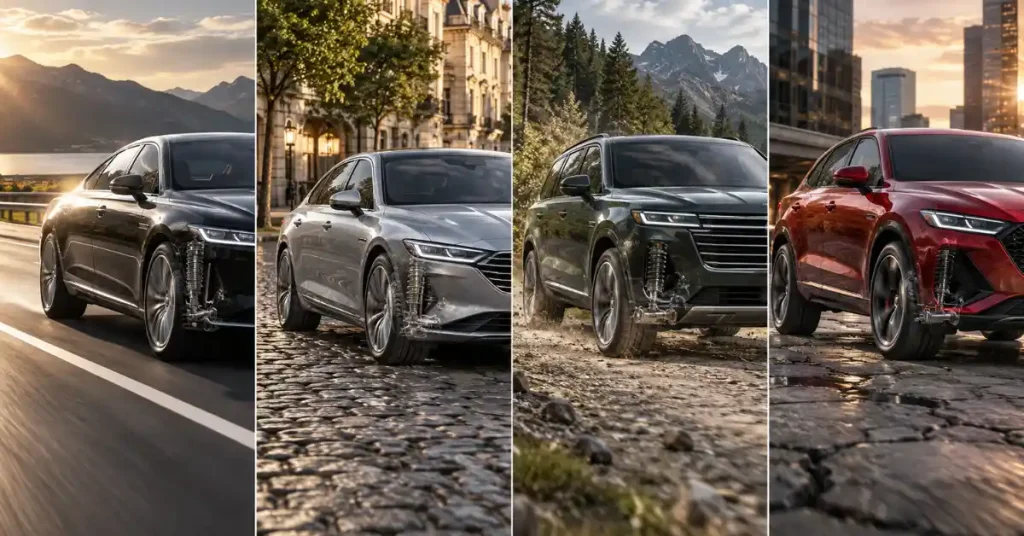
A good suspension can completely change how a car feels on the road. It can make rough roads feel smoother, keep the body stable in corners, and help the tyres stay in contact with the road.
There is no single car that has the best suspension for every driver because comfort and handling require different suspension setups. Cars such as the Mercedes-Benz S-Class, Rolls-Royce models, Bentley Flying Spur, and Citroën models with advanced hydraulic systems are often known for different approaches to ride comfort and road control.
The best choice depends on whether you want a soft luxury ride, sharp handling, or a system that can adapt to changing road surfaces.
What Makes a Car Suspension Good?
A good suspension system must do several jobs at the same time. It needs to support the vehicle’s weight, control body movement, absorb road bumps, and keep the tyres connected to the road. These jobs become more difficult as cars become heavier and more powerful.
Suspension quality is not only about how soft the ride feels. A very soft setup may feel comfortable but allow too much body movement during braking and cornering.
A firm system can improve control but may transfer more road impact into the cabin. Modern cars use advanced dampers, air springs, electronic controls, and sensors to find a better balance.
1. Mercedes-Benz S-Class: A Focus on Luxury and Comfort
The Mercedes-Benz S-Class is one of the best-known luxury cars for advanced suspension technology. Depending on the model and market, Mercedes uses systems such as AIRMATIC air suspension and E-ACTIVE BODY CONTROL. These systems are designed to provide a smooth ride while keeping the vehicle controlled.
The suspension can use sensors and electronic control systems to respond to road conditions and vehicle movement. Some versions can adjust damping and ride characteristics based on driving conditions. This makes the S-Class a strong example of how modern suspension technology can combine comfort with stability.
2. Rolls-Royce: Designed for a Very Smooth Ride
Rolls-Royce takes a different approach to suspension tuning. Its large luxury models focus heavily on reducing the feeling of road imperfections inside the cabin. The suspension system is designed to work with the vehicle’s weight, wheel and tyre setup, and electronic controls to create a calm ride.
The Rolls-Royce Phantom and Ghost are known for their smooth driving character. Their suspension systems use air springs and electronically controlled dampers. Cameras and sensors can also help the vehicle prepare for changes in the road. The result is a setup aimed strongly at passenger comfort rather than sporty steering response.
3. Bentley Flying Spur: Comfort With Strong Road Control
The Bentley Flying Spur is another example of a luxury car that needs to balance comfort and performance. It uses an advanced air suspension system with electronic control. The setup allows the car to adjust its behaviour according to driving conditions and selected modes.
This matters because the Flying Spur is designed for both relaxed long-distance driving and more active driving. A suspension system that is too soft could make a large, powerful car feel less controlled. Bentley therefore uses electronic systems to change suspension characteristics and manage body movement. This gives the car a different balance from a vehicle focused only on soft ride comfort.
4. Citroën: A Different Approach to Ride Comfort
Citroën has a long history of using unusual suspension technology. Older Citroën models became famous for hydropneumatic suspension, which used hydraulic fluid and gas-filled spheres instead of a traditional spring and damper arrangement.
Modern Citroën vehicles use different technology. Some models use Progressive Hydraulic Cushions and suspension systems designed to improve comfort over broken road surfaces. This shows that there is more than one way to create a comfortable ride. Suspension design can vary greatly depending on the vehicle’s size, price, purpose, and target driver.
What Is Air Suspension?
Air suspension replaces traditional steel coil springs with air springs. The air inside these units supports the vehicle while allowing the system to adjust ride height and suspension behaviour.
An electronic control unit can use information from ride-height sensors, steering inputs, vehicle speed, and other systems. The suspension can then adjust air pressure or damper settings according to driving conditions.
Air suspension is common in premium cars because it can provide both comfort and adjustability. However, it also contains more components than a basic coil-spring system. Compressors, air lines, valves, sensors, and air springs can all develop faults over time.
How Do Adaptive Dampers Improve Suspension?
Adaptive dampers allow a car to change how quickly the suspension controls spring movement. Traditional dampers have a fixed basic setting, while adaptive systems can alter damping force electronically.
When the road becomes rough, the system may use a different damping response to improve comfort. During faster cornering, braking, or acceleration, it can increase control to reduce unwanted body movement.
This technology is useful because one suspension setting cannot provide the ideal response for every road. Adaptive dampers allow manufacturers to create different driving modes, such as Comfort, Sport, or Individual, depending on the vehicle.
Why Are Suspension Sensors Important?
Modern suspension systems depend heavily on sensors. These sensors provide information that helps the vehicle understand how the body and wheels are moving.
Common information can include:
- Vehicle ride height
- Wheel movement
- Steering angle
- Vehicle speed
- Body acceleration
- Braking and acceleration forces
The electronic control unit uses this information to adjust dampers, air pressure, or other suspension components. If a sensor sends incorrect data, the system may not respond correctly. A dashboard warning can sometimes appear when the control unit detects a fault.
What Suspension Is Best for UAE Roads?
UAE roads can include smooth highways, speed bumps, rough access roads, construction areas, and uneven surfaces. High temperatures can also place extra stress on rubber components, seals, tyres, and other vehicle parts.
For daily UAE driving, a suspension system needs to provide comfort without losing stability. Air suspension and adaptive damping can be useful because they can change their response according to road and driving conditions.
However, advanced technology does not make a suspension immune to wear. Incorrect tyre pressure, damaged control arms, worn bushings, weak dampers, and alignment problems can affect ride quality even on a premium vehicle.
Does a Softer Suspension Mean It Is Better?
Not necessarily. A softer suspension can provide a comfortable ride because it allows the wheels and body to move more easily over bumps. However, too much movement can affect cornering and braking control.
A firmer suspension can reduce body roll and provide a more direct driving feel. The downside is that sharp bumps may be felt more strongly inside the cabin.
This is why luxury manufacturers often use adaptive suspension. Instead of choosing only soft or firm settings, the vehicle can adjust damping and other suspension characteristics. The driver can then have more comfort during normal driving and stronger body control when needed.
What About Sports Cars?
Sports cars have different suspension goals from large luxury sedans. Their systems need to control body movement during fast cornering, braking, and acceleration. Tyre contact and steering response are major priorities.
The Porsche 911 is a good example of this approach. Porsche uses systems such as Porsche Active Suspension Management, or PASM, on many versions. The system electronically controls damper settings to suit road and driving conditions.
This does not mean a sports car provides a better ride than a luxury sedan. It means the suspension is designed around a different purpose. One focuses more on handling while the other places greater weight on passenger comfort.
Why Suspension Design Depends on the Car
There is no universal suspension setup because cars have different jobs. A luxury sedan needs to keep passengers comfortable. A sports car needs quick response and strong body control. An SUV needs enough suspension travel and strength for its greater height and weight.
Vehicle weight also affects suspension design. A heavy luxury SUV needs springs and dampers capable of controlling a larger mass. Wheel size and tyre sidewall also have an effect. Large wheels with low-profile tyres can make road impacts feel stronger.
Engineers therefore tune suspension around the complete vehicle instead of choosing one technology simply because it is expensive or complex.
How Can You Tell if Your Suspension Is Working Properly?
You do not need specialist equipment to notice many suspension problems. Changes in ride quality can provide early clues. A car that suddenly feels rough, bouncy, unstable, or uneven may need an inspection.
Other warning signs include:
- The car continues bouncing after a bump.
- One side sits lower than the other.
- The steering feels loose or unusual.
- The vehicle pulls to one side.
- Tyres develop uneven wear.
- You hear knocking over bumps.
- The suspension warning light comes on.
- An air-suspension vehicle drops after parking.
These symptoms do not always mean the suspension itself is damaged. Tyres, wheel alignment, steering parts, and other systems can create similar problems.
Does Advanced Suspension Need More Maintenance?
Advanced suspension can provide excellent comfort and control, but it also has more parts that may need attention. An air suspension system, for example, can contain air springs, compressors, valves, sensors, air lines, and electronic controls.
A fault in one component can affect the way the complete system operates. A small air leak can make the compressor run more often. Continued operation with a leak can place extra stress on the compressor.
Regular inspections can help detect these issues early. A technician can also use diagnostic equipment to check stored fault codes and system data when an electronic suspension problem appears.
Which Car Should You Choose for the Best Suspension?
The answer depends on what you expect from the car. If your main goal is a very soft luxury ride, large premium sedans such as the Rolls-Royce Phantom and Mercedes-Benz S-Class use advanced systems designed around passenger comfort.
If you want luxury with a stronger performance focus, cars such as the Bentley Flying Spur combine air suspension technology with performance-oriented chassis systems. For drivers who value handling, sports cars such as the Porsche 911 use adaptive suspension technology designed for body control and road response.
The important point is that “best” depends on the job. Comfort, handling, road clearance, stability, and maintenance needs should all be considered.
Why Proper Suspension Maintenance Matters
Even the most advanced suspension system cannot perform well when its components are worn or damaged. A leaking air spring, weak damper, worn control arm, damaged bushing, or faulty ride-height sensor can change how the vehicle behaves.
Ignoring these problems may also affect tyres, steering, alignment, and braking stability. Regular suspension checks are especially useful for luxury vehicles because their systems can be complex and expensive to repair.
If your car no longer feels as smooth or stable as it once did, a professional inspection can help find the cause before the problem becomes more serious.
Final Thoughts
There is no single suspension system that can be called the best for every type of driving. The Mercedes-Benz S-Class and Rolls-Royce models focus strongly on luxury and ride comfort, while the Bentley Flying Spur combines comfort with performance.
Sports cars such as the Porsche 911 use advanced systems to give drivers stronger handling and body control. What matters most is how the suspension matches the vehicle’s purpose and your driving needs.
Even advanced systems require regular checks to maintain their performance. If you notice bouncing, unusual noises, uneven ride height, poor handling, or tyre wear, professional suspension repair can help restore the car’s road performance.
For inspection, diagnosis, and repair of suspension problems, contact Suspension Repair Dubai and have your vehicle checked by trained technicians. Proper suspension care can help keep your car comfortable, stable, and safe on UAE roads.