Porsche Suspension Repair in Dubai
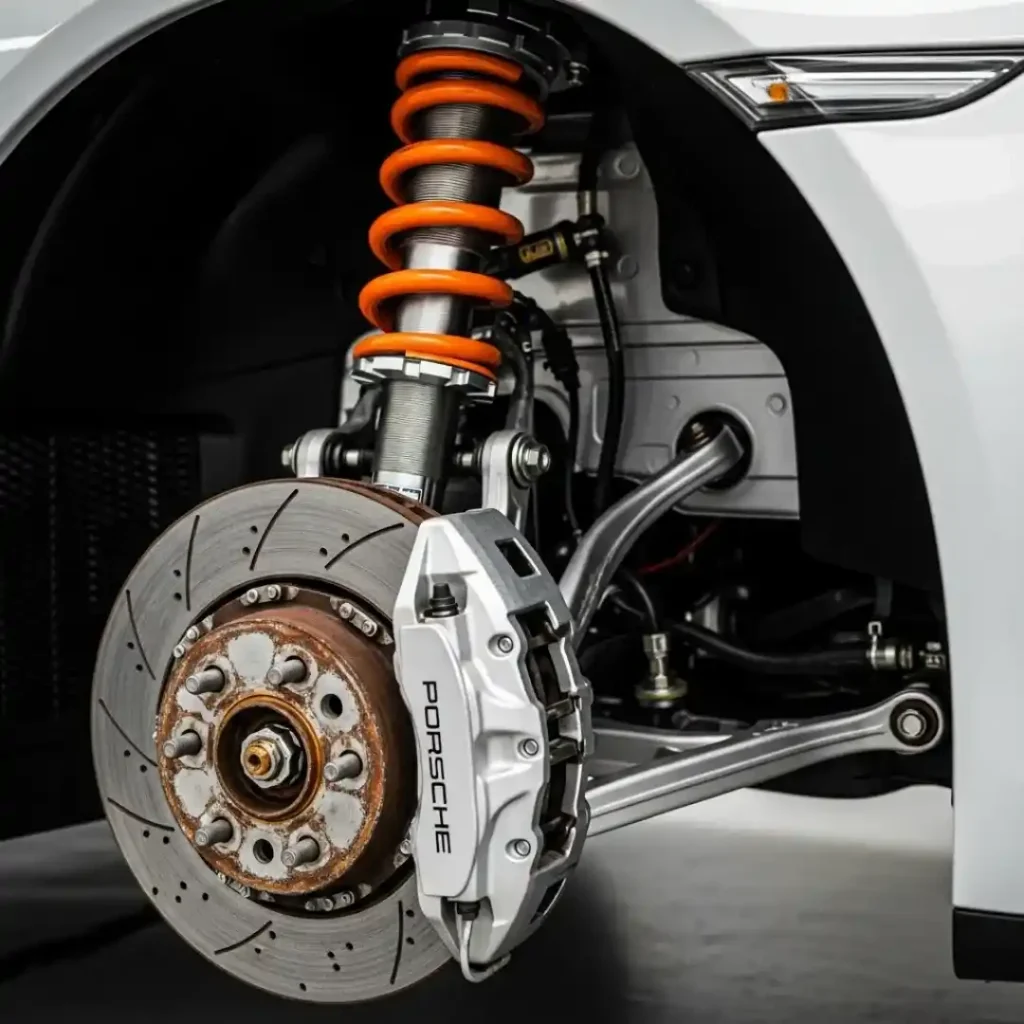
The suspension system is one of the most crucial components in any Porsche, ensuring comfort, precision, and stability. From the iconic 911 to the luxurious Cayenne and the electric Taycan, Porsche vehicles are engineered to deliver unmatched driving dynamics, and that performance depends heavily on a perfectly tuned suspension.
If you notice reduced control, strange noises, or uneven height in your Porsche, it could indicate a suspension problem. Timely suspension repair enhances ride comfort and prevents costly long-term damage.
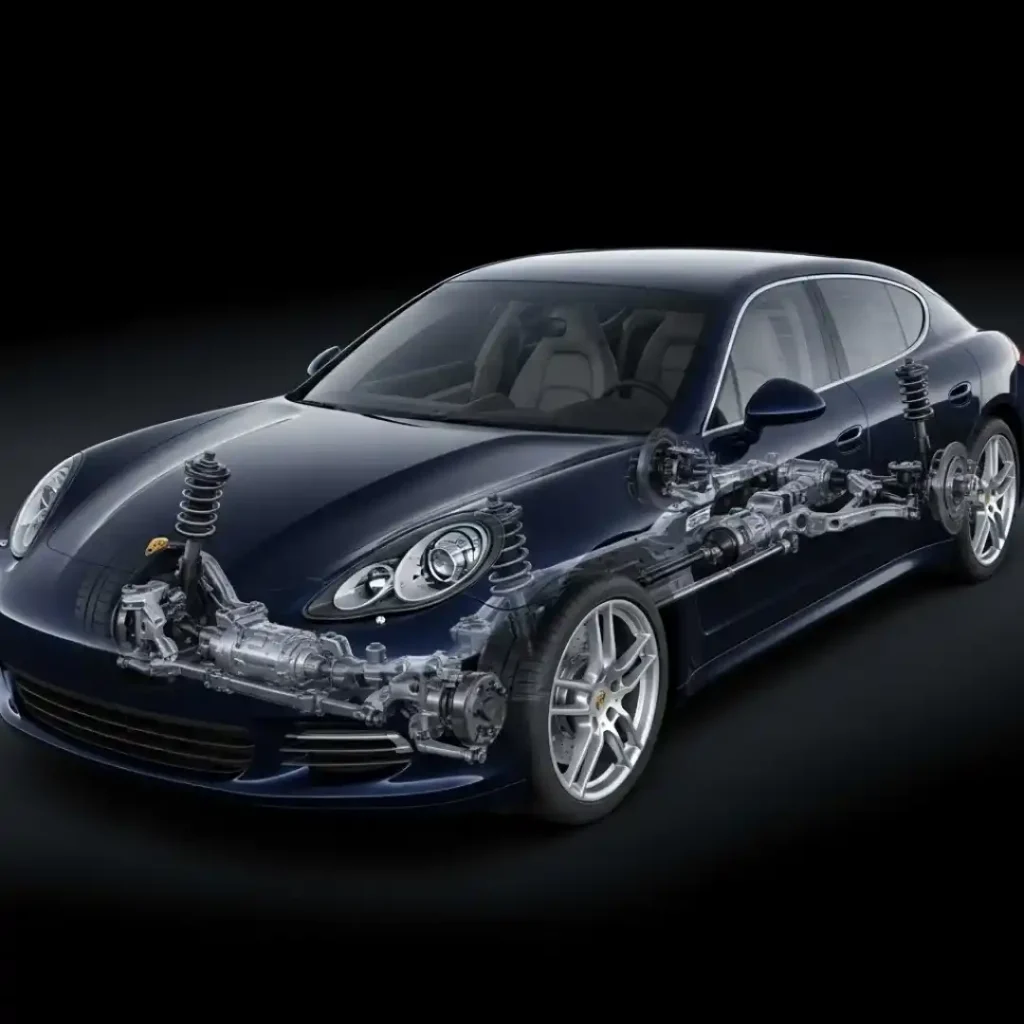
How the Porsche Suspension System Works
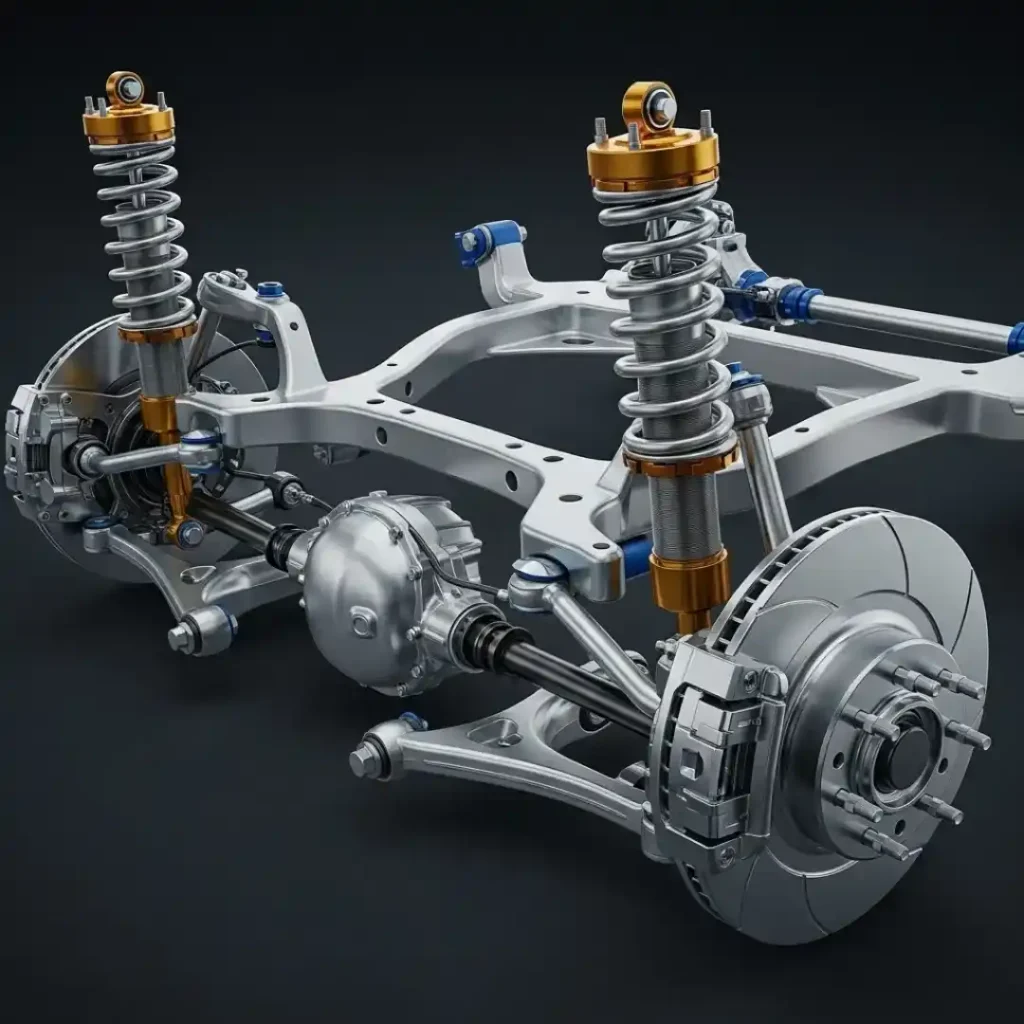
Porsche uses advanced suspension technologies that vary across its models, such as PASM (Porsche Active Suspension Management), PDCC (Porsche Dynamic Chassis Control), and air suspension systems.
The suspension absorbs road shocks, maintains tyre contact, and stabilises the car during cornering. In performance models, these systems dynamically adjust damping rates and ride height to deliver a sporty yet comfortable ride.
Understanding how it works helps in identifying early warning signs before major issues develop.
Signs Your Porsche Needs Suspension Repair
You may require a Porsche suspension service if you notice any of the following symptoms:
- Uneven tire wear
- Difficulty steering or the vehicle pulling to one side
- Excessive bouncing on uneven roads
- Nose-diving during braking
- Clunking or knocking noises from the undercarriage
- Visible oil leakage from shock absorbers
- Vehicle sagging on one corner
- Rough or unstable ride at high speeds
Ignoring these signs can lead to more serious handling problems and safety risks.
Common Porsche Suspension Problems
Each Porsche model may face specific issues depending on its design:
- Air Suspension Leaks — common in Cayenne, Panamera, and Taycan.
- Worn Control Arms and Bushings — seen in 911, Boxster, and Cayman.
- Faulty Dampers or Shock Absorbers — typical in Macan and older 911 variants.
Height Sensor or Compressor Failure — often affects Porsche SUVs with adaptive air suspension.
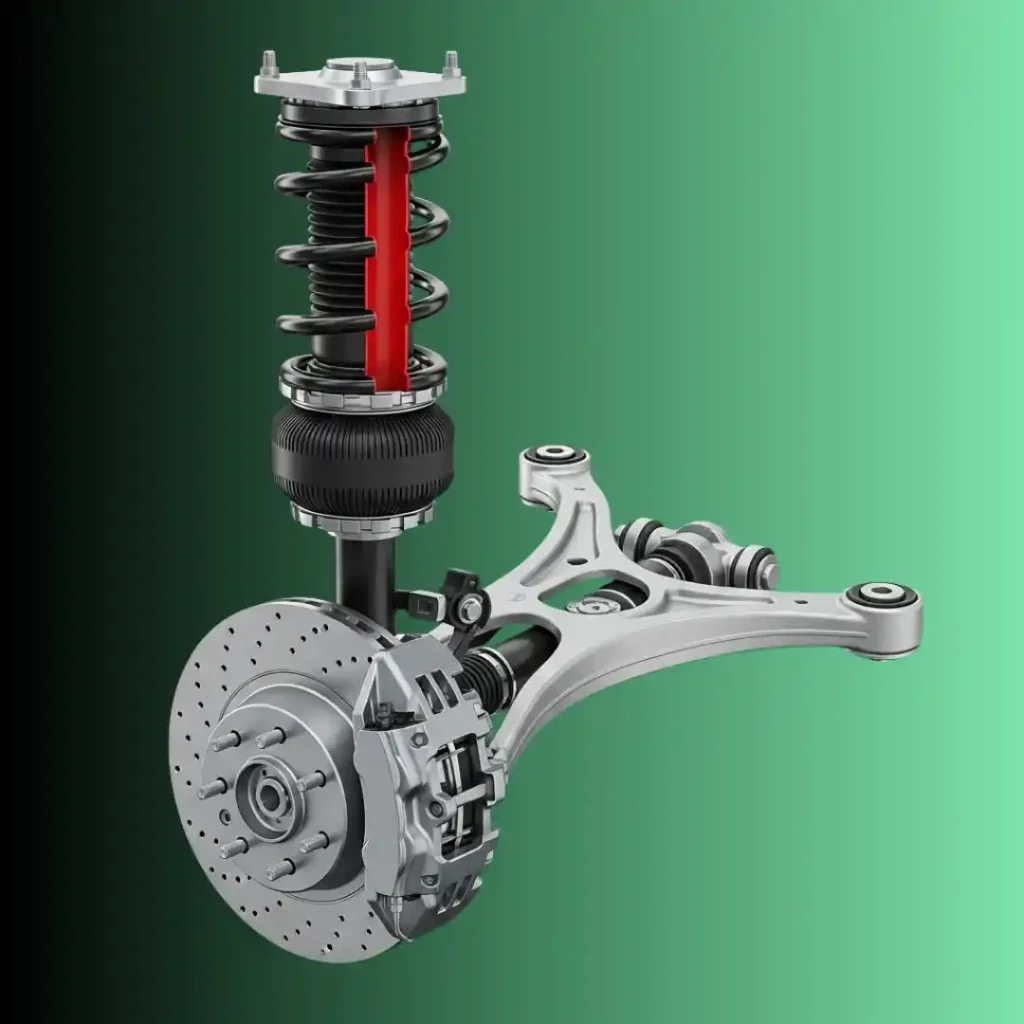
Porsche Air Suspension Problems
Luxury Porsche models like the Cayenne, Panamera, and Taycan feature adaptive air suspension for superior comfort and control. However, air suspension components can wear over time.
Common air suspension issues include:
- Air compressor malfunction
- Airbag leaks
- Ride height imbalance
- Faulty height sensors
- System calibration errors
When these issues arise, it’s best to have your car checked at a trusted Porsche suspension repair centre in Dubai to prevent further damage.
Our Porsche Suspension Repair Services
Our Porsche technicians are equipped with the expertise and diagnostic tools required for all types of suspension systems.
We offer complete Porsche suspension services, including:
- Porsche suspension system diagnostics
- Air suspension repair and calibration
- Shock absorber repair & replacement
- Strut and spring replacement
- Control arm and bushing replacement
- Ball joint and tie rod repair
- Porsche suspension alignment
- Height sensor calibration
- Air compressor and valve block repair
- Sway bar and link replacement
Porsche double wishbone and multilink suspension repair
Porsche Models We Service
We handle the complete range of Porsche vehicles, from classics to the latest electric models:
| Porsche Model Series | Variants Covered | Suspension Type |
|---|---|---|
| Porsche 911 | Carrera, Targa, Turbo, GT3, GT2 RS | PASM, Coil, Adaptive |
| Porsche Cayman | Base, S, GTS, GT4, GT4 RS | PASM, Sport Suspension |
| Porsche Boxster | Boxster, S, GTS, Spyder | PASM, Coil |
| Porsche Panamera | 4, 4S, GTS, Turbo, Turbo S, E-Hybrid | Air Suspension |
| Porsche Cayenne | Base, S, Turbo, Turbo GT, Coupe, E-Hybrid | Air Suspension |
| Porsche Macan | Standard, S, GTS, Turbo | Coil, Air (optional) |
| Porsche Taycan | 4S, Turbo, Turbo S, Cross Turismo | Air Suspension |
| Porsche 918 Spyder | All Variants | Adaptive Coilover |
| Porsche GT Models | GT3 RS, GT4 RS, GT2 RS | Sports Coil Suspension |
Comparison: Air Suspension vs. Coil Suspension
| Feature | Air Suspension | Coil Suspension |
|---|---|---|
| Comfort | Superior, adjustable ride comfort | Firm, sporty feel |
| Handling | Adaptive for smooth and dynamic driving | Stable at high speeds |
| Maintenance | Higher maintenance cost | Low maintenance |
| Durability | Prone to air leaks over time | Long-lasting and reliable |
| Used In | Cayenne, Panamera, Taycan | 911, Boxster, Cayman |
How It Works: Our Porsche Suspension Repair Process
We follow a systematic process to ensure precise and lasting results:
- Inspection & Diagnosis – Detailed suspension and undercarriage inspection.
- Component Testing – Shock absorbers, struts, control arms, sensors, and airbags tested.
- Report & Approval – Transparent explanation before any repair begins.
- Professional Repair & Replacement – Genuine or OEM-quality Porsche parts used.
- Calibration & Alignment – Suspension height and wheel alignment restored.
- Final Testing – Road test to ensure performance and comfort are fully restored.
Benefits of Professional Porsche Suspension Repair
- Improved ride comfort and handling
- Increased vehicle safety
- Extended lifespan of tires and suspension parts
- Prevention of uneven tire wear
- Reduced long-term repair costs
- Maintains Porsche’s original performance standards
Cost and Maintenance
The cost of Porsche suspension repair depends on the model, system type, and components involved. Instead of quoting a fixed amount, a comprehensive inspection is the best way to determine the exact needs of your car.
Regular maintenance and early diagnosis can help you avoid expensive replacements and keep your Porsche performing at its best.
Why Choose Us
- Certified Porsche suspension technicians
- Advanced diagnostic and calibration tools
- OEM-grade Porsche suspension parts
- Transparent repair process
- Honest consultation and quality assurance
Frequently Asked Questions
How do I know if my Porsche suspension needs repair?
You may need suspension repair if your Porsche feels unstable, sits unevenly, produces knocking sounds, or handles poorly, especially on rough roads.
What are the most common suspension problems in Porsche models?
Frequent issues include air leaks, faulty compressors, worn control arms, and leaking shock absorbers, particularly in Cayenne and Panamera models.
How often should I service my Porsche’s suspension?
It’s best to inspect or service your Porsche suspension every 40,000–60,000 km or once a year, especially if you drive on rough or uneven roads.
Can I drive with a faulty suspension?
Driving with suspension problems can reduce stability, damage tires, and compromise safety. It’s best to get it checked immediately by a Porsche specialist.
What’s the difference between air and coil suspension in Porsche cars?
Air suspension offers smoother comfort and adjustable ride height, while coil suspension provides better handling and durability for sporty driving.
Which Porsche models face the most suspension issues?
Models with air suspension, like the Cayenne, Panamera, and Taycan, commonly face air leaks or compressor failures, unlike the coil-based 911 or Boxster.
How long does Porsche suspension repair take?
Repairs usually take 1–3 days, depending on the model and the type of issue. Air suspension repairs typically take longer due to calibration.
Are genuine Porsche parts used for repair?
Yes, reputable Porsche service centers always use OEM-grade or genuine Porsche parts to maintain performance, comfort, and warranty compliance.
How much does Porsche suspension repair cost?
Costs depend on the model, suspension type, and parts required. A diagnostic inspection is recommended before estimating the exact repair cost.
Can I convert my Porsche from air to coil suspension?
Yes, conversion is possible for some models, but it requires proper compatibility checks, calibration, and expert installation to ensure balance and safety.