
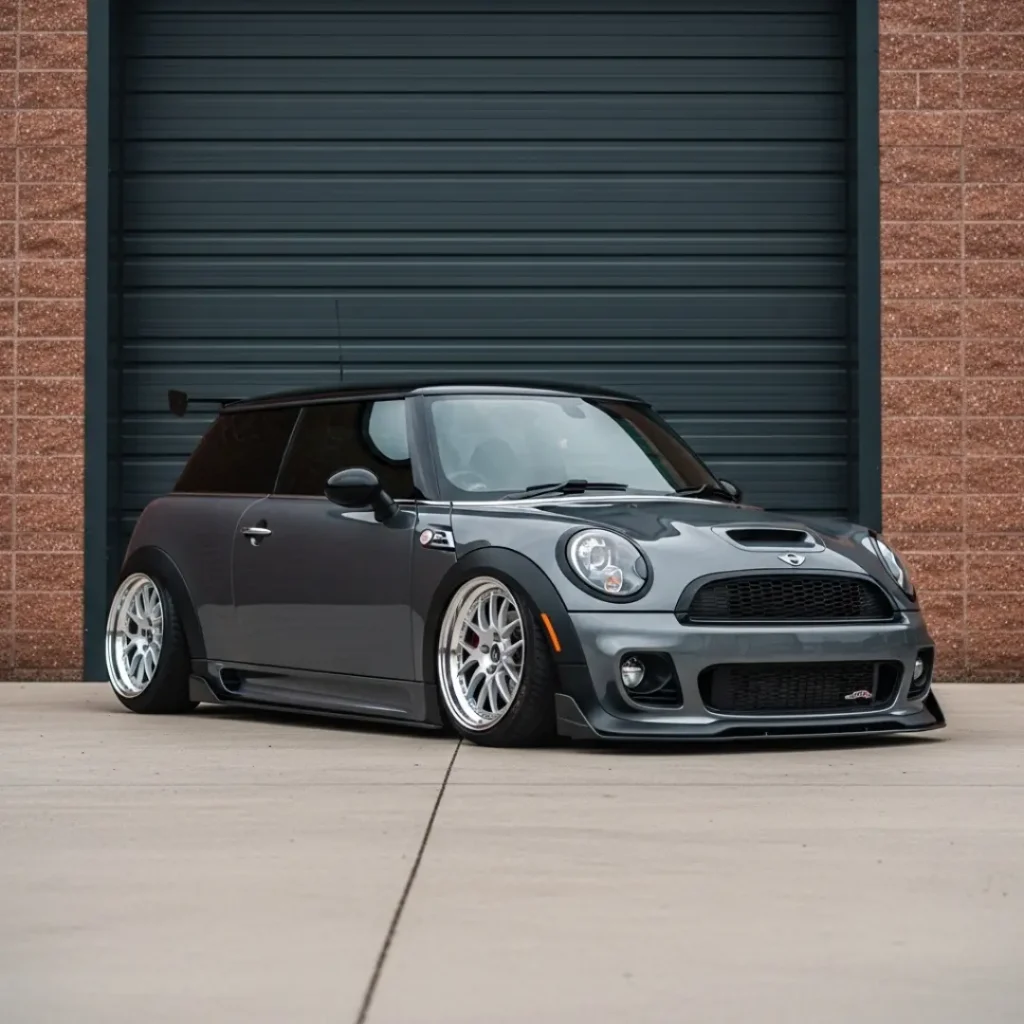
Mini Cooper Suspension Repair in Dubai: Complete Guide for All Models
Mini Cooper vehicles are known for their agile handling, distinctive design, and fun-to-drive personality. However, like every high-performance European car, the suspension system of a Mini plays a crucial role in ensuring that perfect balance between comfort and control.
If your Mini feels bumpy or unstable or makes strange noises when turning or braking, it might be time for a suspension inspection. This complete guide will help you understand Mini Cooper suspension repair in Dubai, common issues, models we service, and what to expect during the repair process.
Understanding the Mini Cooper Suspension System
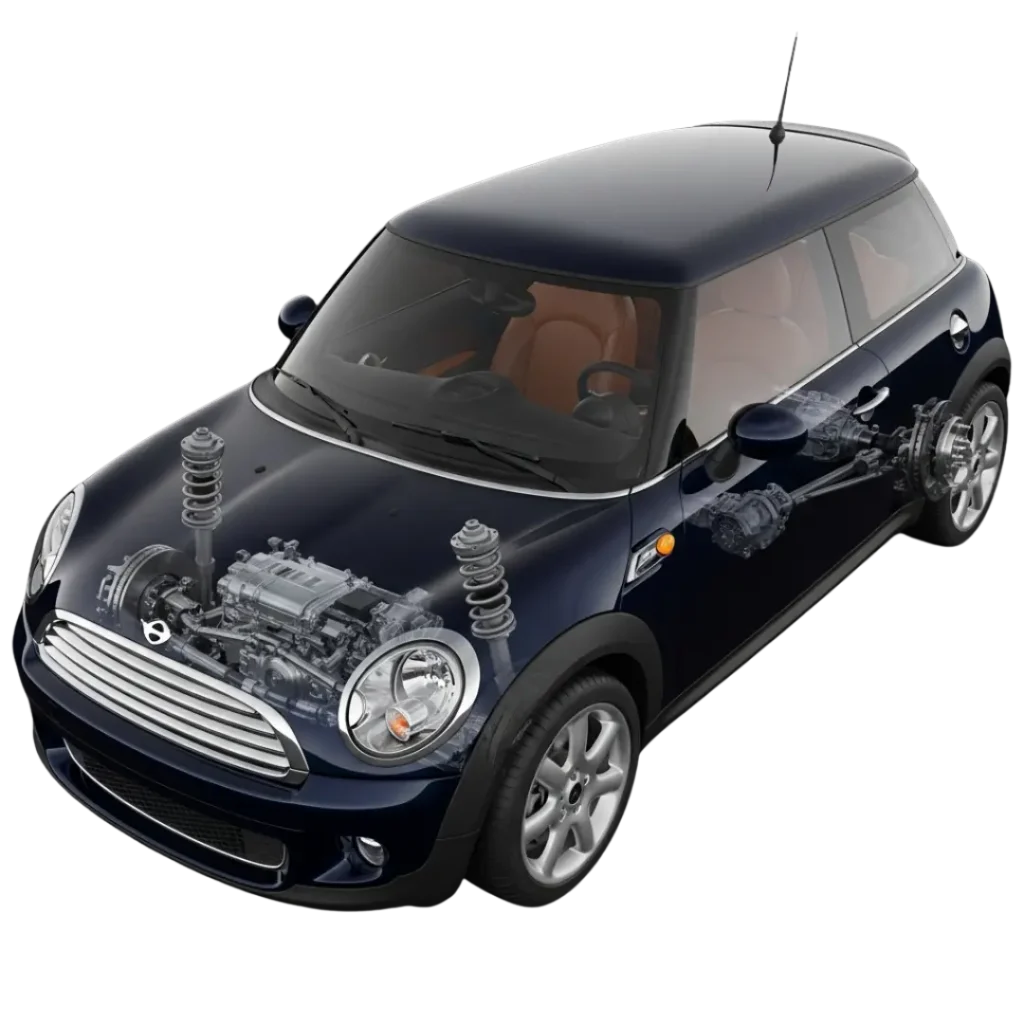
Mini Cooper’s suspension setup is designed for precision and responsiveness. Unlike ordinary cars, Minis use a compact, low-centre suspension design that enhances handling and keeps the car glued to the road.
Key Components:
- Shocks and Struts: Absorb bumps and maintain tyre contact with the road.
- Coil Springs: Support vehicle weight and control ride height.
- Control Arms and Bushings: Connect suspension to the frame and allow smooth movement.
- Sway Bars (Stabilizer Links): Prevent body roll during turns.
- Air or Adaptive Suspension (in newer models): Adjusts damping based on driving conditions.
Because Mini suspension systems are tightly engineered, even minor wear or misalignment can affect driving dynamics. Regular maintenance helps avoid costly damage and ensures your Mini retains its “go-kart” feel.
Common Mini Cooper Suspension Problems
Over time, suspension components wear down, especially under Dubai’s heat and rough road conditions. Here are the most frequent issues faced by Mini owners:
1. Worn Shocks and Struts
You might feel your car bouncing excessively or see oil leaking from the shock absorbers. This problem is common in Mini Cooper Hatch, Convertible, and Clubman models.
Fix: Replace the struts or shocks in pairs (front or rear) to maintain balanced handling.
2. Damaged Control Arm Bushings
Worn bushings cause vibrations, clunking sounds, and uneven tire wear. The issue is often found in Mini Cooper S and Countryman models.
Fix: Replacement of control arms and alignment calibration.
3. Broken or Sagging Coil Springs
When coil springs break or sag, you’ll notice uneven ride height or poor cornering.
Fix: Replace both springs on the same axle to ensure consistent height and comfort.
4. Air Suspension Failure
Some models, such as the Mini Countryman or John Cooper Works (JCW), feature air or adaptive suspension systems. Air leaks, compressor failure, or sensor issues can cause the car to sit unevenly or display a warning on the dashboard.
Fix: Airbag replacement, compressor testing, or valve control repair.
5. Faulty Sway Bar Links
A rattling noise while driving over bumps or taking turns may indicate worn sway bar links.
Fix: Quick replacement to restore stability.
Warning Signs You Need Mini Suspension Repair
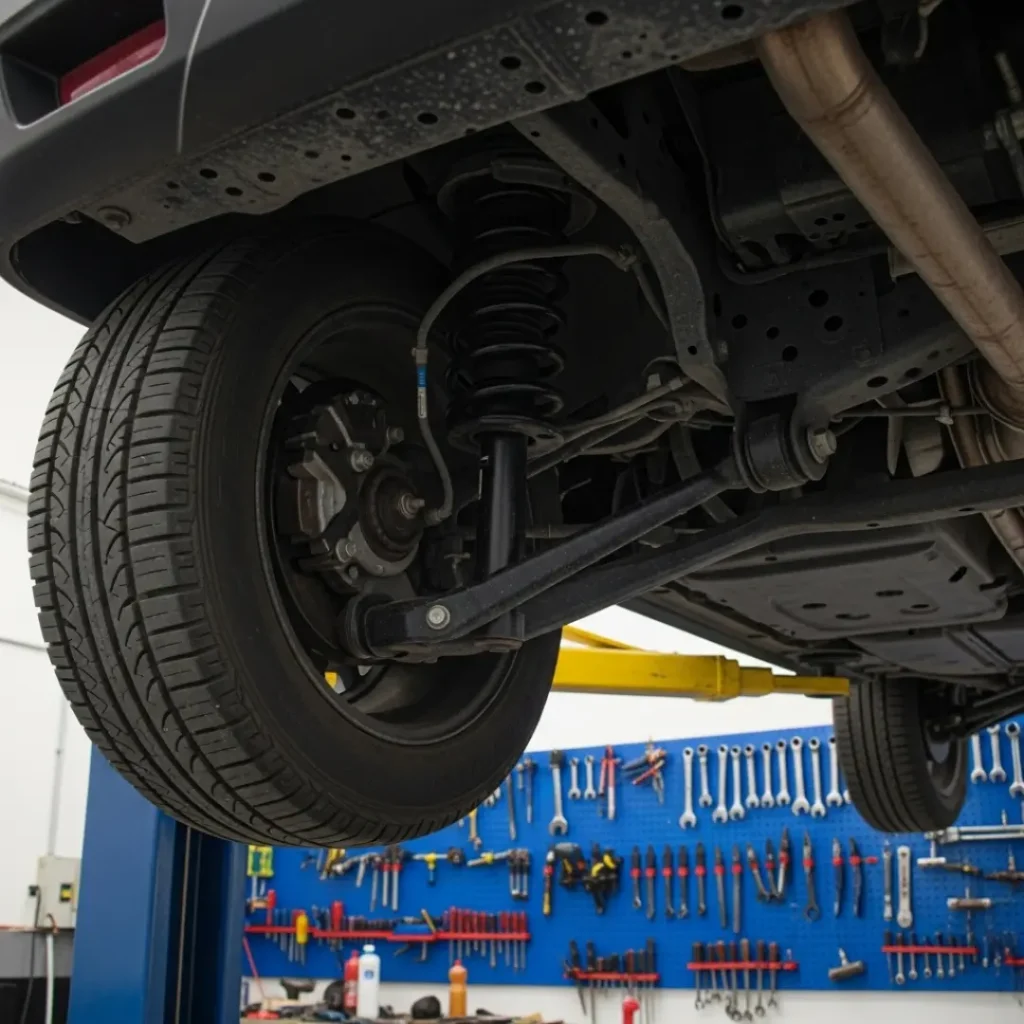
Ignoring suspension symptoms can lead to bigger issues and expensive tyre wear. Watch out for these red flags:
- Rough, bouncy, or uneven ride
- Steering feels loose or hard to control
- The vehicle leans during turns
- “Suspension Fault” message appears on the dashboard
- Tires wearing unevenly
- Greasy or leaking shocks
- Nose-diving during braking
If you notice any of these, get your Mini checked at a specialized Mini suspension repair center in Dubai as soon as possible.
Understanding Mini Cooper Air Suspension System
Some Mini Cooper models, especially the Mini Countryman, Clubman, and certain John Cooper Works (JCW) editions, come equipped with air or adaptive suspension systems instead of traditional coil springs. The air suspension system uses air springs (airbags), ride height sensors, and an air compressor to automatically adjust the vehicle’s height and stiffness based on driving conditions.
This advanced system enhances ride comfort, stability, and cornering precision, especially on Dubai’s mixed road surfaces. It allows the Mini to stay level even when carrying passengers or luggage and adapts instantly during sharp turns or high-speed driving.
However, air suspension components like air struts, compressors, and sensors can wear out over time, leading to leaks, uneven height, or “suspension fault” warnings on the dashboard. Regular inspection and professional servicing at a trusted car suspension repair center are essential to keep the system running smoothly and prevent costly repairs later.
Comparison: Air Suspension vs Standard Coil Suspension
| Feature | Air Suspension | Standard Coil Suspension |
|---|---|---|
| Ride Comfort | Smooth, automatically adjusts to road conditions | Good, but fixed stiffness |
| Handling | Adaptive, reduces body roll during turns | Slight body roll on corners |
| Load Management | Maintains optimal ride height with passengers or cargo | Ride height drops with a heavy load |
| Maintenance | Requires professional checks; components can wear out | Easier and cheaper to maintain |
| Cost | Higher repair and service costs | Lower repair and replacement cost |
| Ideal For | Premium trims, long drives, rough roads | Standard daily driving and city use |
This table helps Mini owners quickly understand the benefits and trade-offs of air suspension compared to standard coil setups, making it easier to decide on repairs, upgrades, or maintenance priorities.
Step-by-Step Mini Cooper Suspension Repair Process
Professional suspension repair follows a structured process to ensure precision and safety.
Inspection and Diagnosis
A certified technician performs a visual inspection, followed by a computerized scan to identify faults in shocks, struts, sensors, or air suspension.
Removing Wheels and Components
The car is safely lifted, and the wheels are removed. Brake lines, sensors, and sway bar links are disconnected carefully.
Replacing Damaged Suspension Parts
Faulty parts like struts, springs, or bushings are removed and replaced with OEM or high-performance equivalents.
Reassembly and Torque Adjustment
Each component is reinstalled using the manufacturer’s torque specifications to ensure proper fitting.
Wheel Alignment and Calibration
Once the suspension is replaced, a 4-wheel alignment ensures balanced handling. For adaptive systems, electronic calibration ensures all sensors and dampers work perfectly.
Final Test Drive
The technician performs a controlled test drive to verify smoothness, stability, and steering precision.
Mini Cooper Suspension Repair Cost in Dubai
The total cost of Mini suspension repair depends on several factors rather than a fixed amount. Here’s what influences it:
| Factor | Description |
|---|---|
| Model Type | Each Mini model (Cooper S, Clubman, Countryman, JCW, Electric) has a unique suspension setup. |
| Suspension Type | Air and adaptive suspensions cost more to service than standard strut setups. |
| Extent of Damage | A simple strut replacement is cheaper than a full overhaul of arms, bushings, and springs. |
| Parts Used | OEM Mini parts offer durability and performance, while aftermarket ones may reduce cost but affect lifespan. |
| Labor Complexity | Tight engine bays and advanced systems require more labor time. |
| Alignment and Calibration | Advanced recalibration is necessary for adaptive or electric models. |
| Service Quality | Experienced Mini specialists in Dubai ensure accuracy and warranty-backed work. |
Always ask for a detailed inspection report before approving repairs; it helps you understand what’s necessary and avoid overcharging.
Professional vs DIY: Which Is Better?
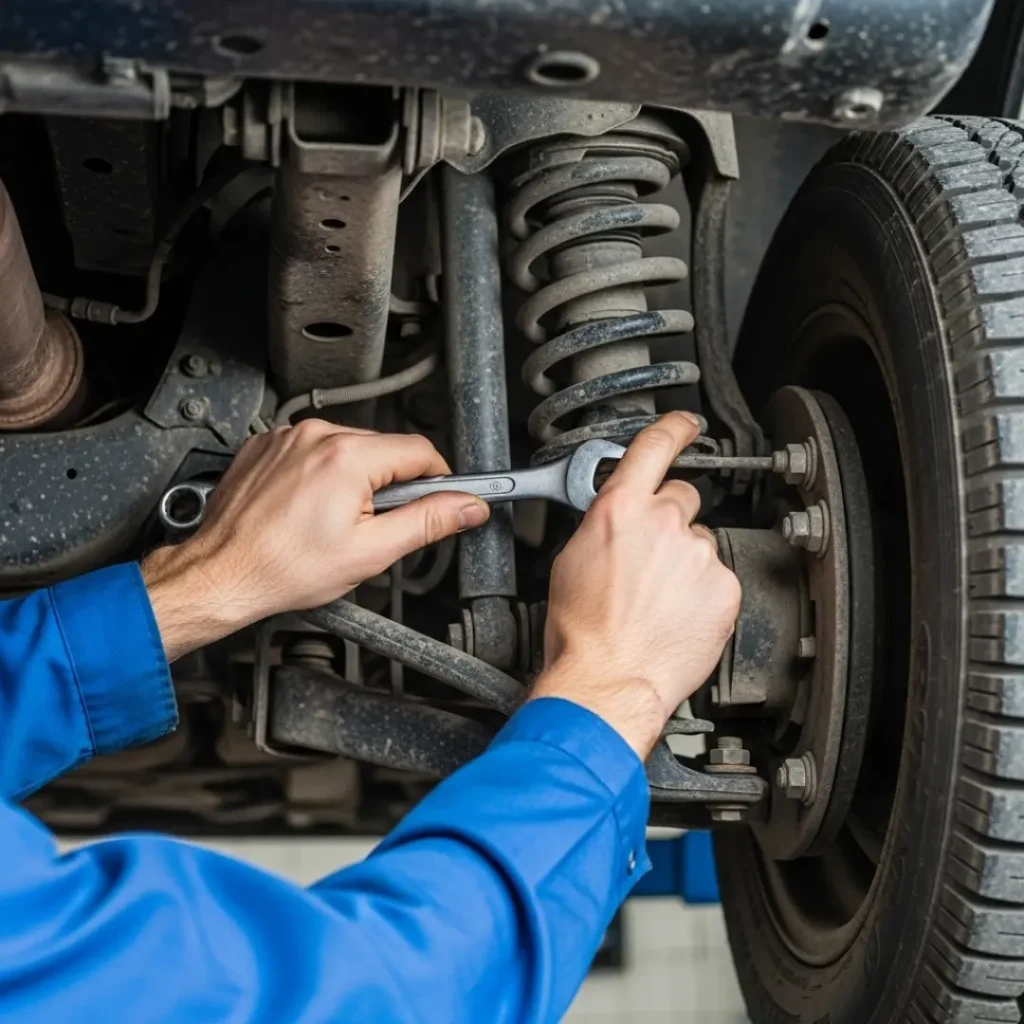
DIY Suspension Repair
While basic shock or spring replacements might look simple, Minis have compact layouts and sensitive electronic components.
Without proper tools, DIY repair can cause further issues, especially on air suspension or adaptive systems.
Professional Suspension Repair
Choosing an authorized Mini suspension repair specialist in Dubai guarantees:
- Trained technicians
- OEM parts
- Correct torque and calibration
- Advanced alignment systems
You get better safety, ride comfort, and long-term reliability.
Mini Cooper Suspension Upgrade Options
For those who want to improve performance or comfort, Mini offers several upgrade paths.
1. OEM Replacement Struts
Perfect for those wanting to maintain a factory feel and comfort.
2. Performance Coilovers
Adjustable suspension systems like KW or Bilstein coilovers allow you to fine-tune ride height and damping, great for Mini Cooper S and JCW models.
3. Air Suspension Kits
Provides adjustable ride height and a smoother drive, especially for Countryman owners who love versatility.
4. Adjustable Sway Bars
Enhance cornering performance by reducing body roll during fast turns.
5. Strut Braces and Bushings
Improve chassis stiffness and steering precision.

Maintenance Tips to Prevent Suspension Problems
To extend the life of your Mini’s suspension system, follow these maintenance habits:
- Inspect suspension components every 10,000 km
- Replace shocks/struts every 60,000–80,000 km
- Avoid high-speed bumps or potholes
- Keep tire pressure balanced
- Get wheel alignment after every major service
- Use genuine Mini parts for replacements
Routine maintenance not only keeps your Mini comfortable but also saves you from expensive repairs later.

Why Choose Us for Mini Cooper Suspension Repair in Dubai
At our Mini-specialized workshop in Dubai, we combine advanced diagnostics, certified technicians, and OEM parts to deliver flawless results every time.
Here’s why Mini owners trust us:
- Certified European car technicians
- State-of-the-art suspension diagnostic systems
- Genuine Mini and performance parts
- Transparent inspection reports
- Free consultation and suspension health check
- Warranty on parts and labor
Whether it’s a Mini Cooper Hatch with worn shocks or a Mini Countryman with an air leak, our experts ensure precise, reliable repairs for every model.
Models We Service
We deal with all models of Mini Cooper. Some common models are listed below:
| Mini Model | Suspension Type | Service Offered |
|---|---|---|
| Mini Cooper Hatch | Standard / Sport | Complete repair & strut replacement |
| Mini Cooper S | Sport / Coilover | Performance upgrade & tuning |
| Mini Clubman | Adaptive Suspension | Diagnostic & control system repair |
| Mini Countryman | AWD / Air Suspension | Air bag, compressor, and valve service |
| Mini Convertible | Standard | Shock & spring replacement |
| Mini Cooper D | Coil Spring | Standard suspension maintenance |
| Mini John Cooper Works (JCW) | Sport / Adjustable | KW, Bilstein, and H&R coilover installation |
| Mini Electric (SE) | Adaptive Suspension | Calibration, shock & strut replacement |
From classic Cooper models to the latest electric Minis, our workshop covers every variant with precision and care.
Frequently Asked Questions
How often should Mini Cooper shocks or struts be replaced?
Mini Cooper shocks and struts generally last between 50,000 to 100,000 kilometers, depending on your driving style and road conditions in Dubai. Frequent driving on rough or uneven roads can wear them out faster. If you notice your car bouncing excessively, leaning during turns, or losing stability while braking, it’s a clear sign that the shocks or struts need replacement. Getting them checked during routine servicing helps avoid costly repairs later and ensures your Mini’s signature smooth handling stays intact.
Can I drive my Mini Cooper with a bad suspension?
Technically, you can, but it’s highly unsafe and not recommended. A faulty suspension affects your Mini’s braking efficiency, steering control, and overall ride comfort. You might experience the car pulling to one side, unstable cornering, or uneven tire wear, all of which compromise safety. Driving too long with a damaged suspension can also strain other components like the steering rack, tires, and chassis. It’s best to get a professional inspection immediately if you notice any handling issues or unusual noises.
Are Mini Cooper suspensions different from other cars?
Yes. Mini Cooper suspension systems are designed for sporty, go-kart-style handling, giving them an edge in agility and performance. Unlike regular cars that focus on comfort, Mini’s suspension uses tighter bushings, stiffer springs, and performance-tuned struts. This setup makes the car feel more responsive but also more sensitive to wear and tear, especially on Dubai’s hot roads. That’s why Minis require specialized suspension technicians familiar with their European engineering to maintain precise performance.
What are the signs of a failing Mini Cooper suspension?
The most common signs include:
- A bouncy or rough ride, especially over small bumps
- Clunking or knocking noises when turning or braking
- Uneven tire wear, usually on the inside edges
- Oil leakage around shocks or struts
- Nose-diving during braking or swaying during lane changes
- Steering feels loose or unresponsive
If you notice even one of these symptoms, your Mini’s suspension likely needs inspection or part replacement before the problem worsens.
Should I replace both shocks or struts at the same time?
Yes, it’s strongly advised to replace shocks and struts in pairs (both fronts or both rears) rather than one at a time. This ensures balanced damping, even tire wear, and consistent handling. Replacing only one side can cause your Mini to lean, handle poorly, or wear out the new part faster. A professional mechanic will usually recommend replacing both sides together and performing an alignment afterward for maximum stability and comfort.
Do I need a wheel alignment after suspension repair?
Absolutely. A wheel alignment is essential after replacing any major suspension components like shocks, control arms, or springs. During repair, the suspension geometry shifts, which can cause misalignment. Without realignment, your Mini might pull to one side, feel unstable at high speeds, or cause premature tire wear. A proper 3D alignment ensures your Mini Cooper drives straight, smooth, and handles corners perfectly, just like it’s meant to.
What’s different about Mini models with air or adaptive suspension?
Certain Mini models, such as the Mini Countryman or Clubman, come with adaptive or air suspension systems. Unlike traditional coil springs, these setups use air compressors, electronic dampers, and ride height sensors to adjust comfort and performance automatically. While they offer an incredibly smooth and customizable ride, they’re also more complex and expensive to repair. Specialized diagnostic tools and experienced technicians are needed to service or calibrate these advanced suspension systems properly.
Is upgrading Mini Cooper suspension worth it?
If you love a sporty, responsive driving experience, then yes, upgrading your Mini Cooper suspension is absolutely worth it. Performance upgrades like coilovers, adjustable dampers, or sway bars can drastically improve cornering stability and body control. However, if comfort and daily driving are your priorities, OEM-style replacements are better suited. It’s best to consult with a suspension specialist who can recommend whether to go for Bilstein, KW, or H&R performance kits depending on your driving habits and budget.
How can I extend the lifespan of my Mini Cooper suspension?
To keep your suspension in top shape:
- Get it inspected every 10,000 km or during routine oil changes.
- Avoid potholes and curbs whenever possible.
- Keep tire pressure properly inflated.
- Replace shocks, struts, and bushings as soon as wear signs appear.
- Always use OEM or high-quality aftermarket parts during replacement.
Regular maintenance ensures your Mini Cooper maintains its famous smooth and sporty handling for years.
Do you service all Mini Cooper models?
Yes, we handle suspension repair and maintenance for all Mini Cooper models, including:
- Mini Cooper Hatch
- Mini Cooper S
- Mini Cooper Clubman
- Mini Cooper Countryman (F60)
- Mini Cooper Convertible
- Mini John Cooper Works (JCW)
Each of these models has unique suspension characteristics, and certified mechanics use the correct diagnostic tools and parts for every version to ensure precise results.