
8 Benefits of Professional Suspension Repair for Your Land Rover
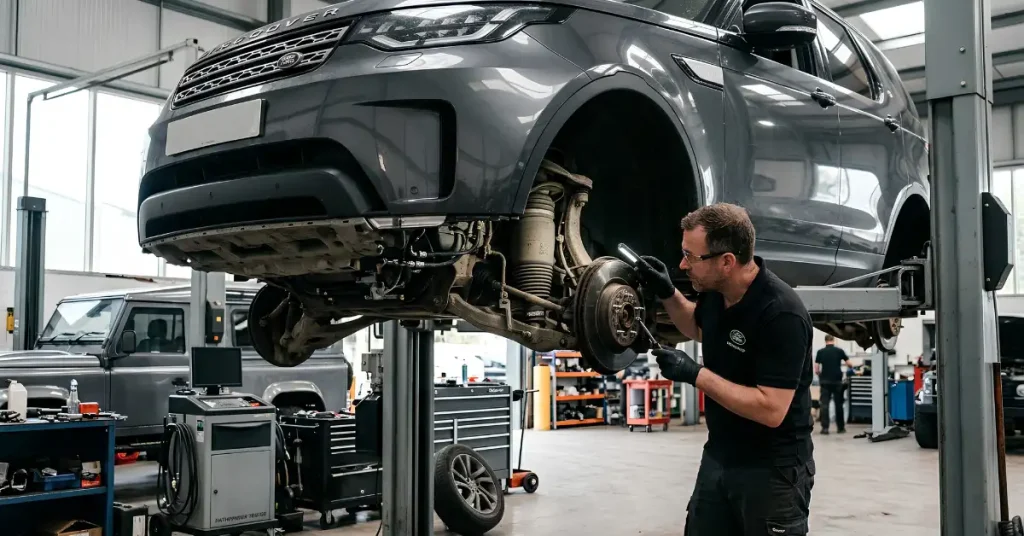
A Land Rover needs a strong and well-maintained suspension system to handle city roads, highways, rough surfaces, and off-road conditions. When suspension parts wear out, the vehicle can become less comfortable, less stable, and harder to control.
Professional suspension repair offers several important benefits. It can restore ride comfort, improve steering control, protect tyres, maintain correct wheel alignment, improve braking stability, reduce further component wear, support off-road performance, and improve overall driving safety.
Using proper testing and quality replacement parts also helps make sure the actual fault is fixed instead of only treating its symptoms.
Why Professional Suspension Care Matters for a Land Rover
Land Rover models use suspension systems designed to support heavy vehicles while providing comfort and strong handling.
Depending on the model, the system may include coil springs, air springs, shock absorbers, control arms, bushes, ball joints, height sensors, and electronic suspension controls.
Because many of these parts work together, one worn component can affect others. A weak damper can change wheel movement, while a damaged control arm bush can affect alignment. Professional repair focuses on finding the real source of the problem and restoring the suspension system as a whole.
Key Benefits of Professional Land Rover Suspension Repair
1. Restores a Smoother and More Comfortable Ride
One of the first benefits of professional suspension repair is improved ride comfort. A Land Rover should absorb road bumps without excessive bouncing, harsh movement, or repeated body motion.
Worn car shock absorbers, damaged bushes, and weak springs can make the vehicle feel uncomfortable on uneven roads. A professional technician can inspect these parts and identify which component is causing the problem.
Replacing a worn damper or damaged suspension bush can help control wheel movement and reduce vibration entering the cabin. This is especially useful for larger Land Rover models, where suspension condition has a noticeable effect on ride quality.
2. A Healthy Suspension Helps Keep the Vehicle Stable
Suspension parts do more than support the vehicle. They also help keep the wheels in the correct position while the vehicle turns, brakes, and accelerates.
Worn control arm bushes, ball joints, tie rods, or dampers can create unwanted movement. The driver may notice loose steering, excessive body roll, or a feeling that the vehicle is not responding as quickly as it should.
Professional repair can restore the correct movement of these components. A technician can also check suspension geometry and related steering parts. This helps the Land Rover feel more stable and predictable, especially during cornering or sudden steering movements.
3. Helps Prevent Uneven Tyre Wear
Tyres depend on the suspension system to maintain proper contact with the road. When suspension components become worn or damaged, the wheel may move outside its correct position.
This can lead to uneven tyre wear, especially along the inner or outer edge of the tread. A damaged control arm bush or ball joint may also change the wheel’s alignment while driving.
Professional suspension repair can correct the mechanical problem before a new set of tyres is damaged. A technician can also check camber, caster, and toe settings when needed. Proper alignment and suspension condition can help tyres wear more evenly and last longer.
4. Good Suspension Helps Maintain Tyre Contact
Braking performance depends on more than brake discs and brake pads. The suspension also plays a role because it helps keep the tyres connected to the road.
A worn shock absorber may allow the vehicle to move excessively during hard braking. The front end may dive more than normal, while the rear can become lighter. This can affect how stable the vehicle feels when stopping.
Professional suspension repair can restore proper damping and control. The technician can inspect the shocks, springs, control arms, bushes, and other related parts. Keeping these components in good condition helps the Land Rover remain more balanced during braking.
5. One Faulty Part Can Put Extra Stress on Others
Suspension components work as a connected system. When one part becomes weak, nearby components may experience additional movement or stress.
For example, a weak shock absorber can allow repeated wheel movement. A worn control arm bush can allow unwanted movement in the suspension assembly. A damaged ball joint can also affect nearby steering and suspension components.
Professional repair aims to find the original source of the problem instead of replacing parts without proper testing. Fixing a worn component early may help protect other parts from unnecessary wear. This can reduce the chance of a small suspension issue turning into a larger repair.
6. Correct Geometry Helps the Land Rover Drive Straight
Wheel alignment is important for both handling and tyre life. The suspension system controls the position of the wheels, so worn or damaged components can affect alignment.
A Land Rover with poor alignment may pull to one side, have an off-centre steering wheel, or develop uneven tyre wear. The problem can become more noticeable after hitting potholes, curbs, or rough surfaces.
Professional suspension work includes checking whether damaged components are affecting wheel geometry. After certain repairs, an alignment check may also be needed. Correct toe, camber, and caster settings help the vehicle track properly and maintain more even tyre contact.
7. Protects Air Suspension Systems
Some Land Rover models use advanced air suspension systems. These systems use air springs, compressors, valve blocks, height sensors, air lines, and electronic controls to adjust vehicle height.
An air leak can make the compressor work harder as it tries to maintain the correct pressure. A faulty height sensor can also send incorrect information to the suspension control system.
Professional repair is useful because air suspension problems are not always caused by the compressor. A technician should check the air springs, lines, valves, sensors, compressor, and electrical connections. Finding the actual fault can prevent unnecessary replacement of expensive components.
8. Keeps Off-Road Performance More Reliable
Land Rover vehicles are designed to handle more than smooth roads. Many owners use them on gravel, sand, rocky tracks, and other difficult surfaces. This places greater demands on the suspension.
Worn dampers, weak springs, damaged bushes, or loose joints can reduce the vehicle’s ability to handle uneven terrain. The wheels need enough controlled movement to maintain contact with the ground.
Professional suspension repair can restore the movement and strength needed for demanding driving conditions. This is particularly important for drivers who regularly switch between city roads and off-road surfaces. A well-maintained suspension system supports better traction, stability, and control.
Signs Your Land Rover May Need Suspension Repair
Suspension problems can develop slowly, so drivers may notice small changes before a major fault appears. Knowing these signs can help prevent further damage.
Common warning signs include:
- Excessive bouncing after driving over bumps.
- Clunking or knocking sounds from the suspension.
- Uneven ride height between different corners.
- Vehicle pulling to one side.
- Uneven tyre tread wear.
- Excessive body roll during cornering.
- Front-end diving during braking.
- Steering vibration at certain speeds.
- Air suspension warning messages on equipped models.
- Visible fluid leaks around shock absorbers.
These symptoms can have several possible causes. A proper inspection is therefore more useful than replacing parts based only on one symptom.
What Professional Land Rover Suspension Repair Includes?
A professional suspension inspection should cover the main mechanical and electronic parts of the system. The technician may check shock absorbers, coil springs, air springs, control arms, bushes, ball joints, tie rods, wheel bearings, suspension mounts, and ride-height sensors.
For air suspension models, the system may also need a pressure and leak test. Diagnostic equipment can help identify electronic faults and stored error codes.
The technician should also look for signs of impact damage, corrosion, fluid leaks, and loose mounting hardware. If suspension work has affected wheel geometry, a wheel alignment check may be required after the repair.
When Should You Have the Land Rover Suspension Checked?
You should arrange a suspension inspection if the Land Rover develops a new noise, rough ride, steering change, uneven ride height, or unusual tyre wear. A check is also recommended after a strong impact with a pothole or curb.
Do not wait until the vehicle becomes difficult to drive. Early diagnosis can identify worn parts before they affect other components.
Regular inspections are especially useful for vehicles that travel frequently on rough roads or carry heavy loads. Keeping the suspension in good condition helps maintain comfort, handling, tyre performance, and overall vehicle control.
Conclusion
Professional suspension repair can make a major difference to how a Land Rover feels and performs. Proper repairs can restore ride comfort, improve steering response, support braking stability, reduce tyre wear, protect connected components, maintain wheel alignment, protect air suspension systems, and support reliable off-road driving.
Suspension problems should not be ignored when you notice bouncing, clunking, uneven ride height, steering vibration, or unusual tyre wear. A detailed inspection can identify the actual cause and help prevent more expensive damage.
For Land Rover owners who notice changes in ride quality or handling, professional suspension repair in Dubai can help restore the vehicle’s comfort, stability, and road control with the right diagnosis and repair approach.