
Does Your Mercedes Need Suspension Repair? Key Warning Signs
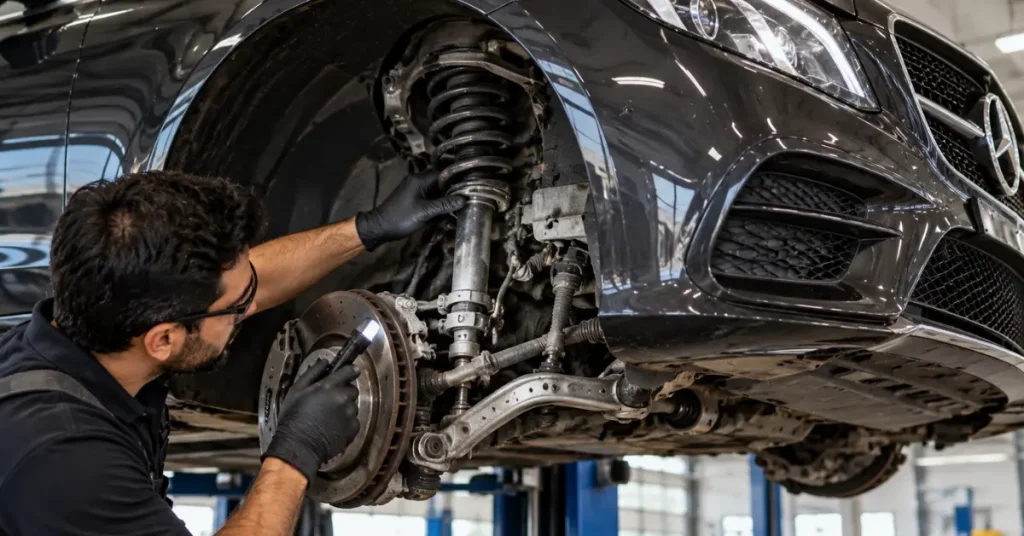
A smooth Mercedes drive can change quickly when the suspension starts to wear out. Small changes in ride comfort, steering, or handling may be early signs of a suspension problem that should not be ignored.
Your Mercedes may need suspension repair if the ride becomes unusually rough, the car pulls to one side, or you notice excessive bouncing after going over bumps.
Uneven tyre wear, knocking or clunking sounds, a low or uneven ride height, and steering that feels loose can also point to worn suspension parts. Leaking shock absorbers, poor cornering, and longer stopping distance are other signs that the suspension system needs attention.
Why Is the Suspension Important in a Mercedes?
The suspension system does much more than make your Mercedes feel comfortable. It helps keep the tyres in contact with the road while supporting the vehicle’s weight and controlling body movement.
Springs, shock absorbers, struts, control arms, bushings, ball joints, and other parts work together during driving. A well-maintained system helps the car brake, turn, and stay stable.
Mercedes models can also use advanced suspension systems such as AIRMATIC air suspension. These systems use air springs, sensors, valves, and an electronic control unit to manage ride height and comfort. A fault in one part can affect the whole driving experience.
Signs Your Mercedes Suspension Needs Attention
1. The Ride Feels Rougher Than Before
A Mercedes is known for a smooth and controlled ride. If you start feeling every small bump, road joint, or pothole through the cabin, the suspension may not be working correctly.
Worn shock absorbers can lose their ability to control spring movement. This allows the vehicle to move more after hitting uneven roads.
A rough ride does not always mean the shock absorbers are damaged. Worn bushings, damaged springs, incorrect tyre pressure, or other suspension faults can create similar symptoms.
A proper inspection can help identify the exact cause before replacing parts that are still in good condition.
2. Your Car Keeps Bouncing After a Bump
Your Mercedes should settle quickly after passing over a speed bump or rough section of road. If the body continues to bounce several times, the dampers may be worn. Shock absorbers control the movement created by the springs. When their damping force becomes weak, the car can keep moving instead of settling.
Excessive bouncing can reduce road grip, especially when driving over uneven surfaces. It may also make passengers feel uncomfortable. More importantly, poor damping can affect steering control and braking stability. A technician should check the dampers, springs, mounts, and related components when this symptom appears.
3. The Car Pulls to One Side
A Mercedes that pulls left or right while driving on a straight road may have an alignment or suspension issue. Wheel alignment problems are common causes, but damaged control arms, worn bushings, bent suspension parts, or uneven tyre pressure can also affect the car’s direction.
If the vehicle suddenly begins pulling to one side, it is worth checking the suspension rather than only adjusting the alignment.
A damaged component can cause the alignment settings to change again after a short time. A workshop can inspect the steering and suspension geometry before carrying out a wheel alignment.
4. You Hear Knocking or Clunking Sounds
Unusual sounds from the front or rear of your Mercedes can point to worn suspension components. A knocking or clunking noise may appear when driving over speed bumps, potholes, or broken road surfaces.
Common causes include worn stabilizer links, control arm bushings, ball joints, strut mounts, or other loose components. The location and timing of the sound can help a technician find the fault.
For example, a noise during steering may point to a different component than a noise that only appears over bumps. Do not ignore repeated suspension sounds because loose or worn parts can affect handling.
What Causes Suspension Problems in Mercedes Cars?
UAE Roads and High Temperatures
Driving conditions in the UAE can place extra stress on suspension parts. High temperatures can affect rubber bushings, seals, and other materials over time. Rough road surfaces, speed bumps, potholes, and uneven roads can also place sudden loads on control arms and dampers.
Heavy traffic adds another type of stress because the suspension is constantly working during slow movement, braking, and acceleration. Dust and sand can also enter areas around moving components.
Regular inspections can help detect worn parts before they cause larger problems. This is especially useful for Mercedes vehicles that are driven every day in Dubai and other busy UAE areas.
Worn Bushings and Mounts
Bushings are rubber or rubber-like parts that reduce vibration between metal suspension components. They also allow controlled movement between parts. Over time, bushings can crack, become soft, or lose their original shape.
When a bushing wears out, you may notice vibration, steering changes, uneven tyre wear, or knocking sounds. Strut mounts can also become worn and create noise or poor steering response.
These parts may look small, but they have an important role in suspension control. Replacing a damaged bushing or mount at the right time can prevent extra stress on nearby components.
Damaged or Weak Springs
Suspension springs support the weight of the Mercedes and help maintain the correct ride height. A weak or broken spring can make one corner of the car sit lower than the others.
You may also notice a rough ride or unusual noise from that area. A damaged spring can change the suspension geometry and place extra load on other components. Coil springs can crack or break, while air suspension models may develop problems with air springs.
If your vehicle looks uneven when parked on a flat surface, the springs and ride-height system should be checked.
What About Mercedes AIRMATIC Suspension Problems?
Mercedes models equipped with AIRMATIC use air suspension technology to provide adjustable ride height and a smooth driving experience. Instead of relying only on traditional coil springs, the system uses air springs and electronic controls.
Sensors monitor vehicle height and other operating conditions. AIRMATIC problems can show up as a vehicle sitting lower than normal, one side dropping after parking, warning messages, or a compressor that runs too often.
An air leak, faulty valve block, damaged air spring, compressor problem, or sensor fault may be responsible. Proper diagnosis is important because replacing the compressor alone may not solve the problem if an air leak remains.
Can Uneven Tyre Wear Point to Suspension Damage?
Tyres can provide useful clues about suspension condition. If the inner or outer edge of a tyre wears much faster than the rest of the tread, there may be an alignment or suspension problem.
Worn control arms, bushings, ball joints, or incorrect suspension geometry can change the way the tyre touches the road. Uneven wear should not be treated as only a tyre problem.
Installing a new tyre without finding the cause can lead to the same wear pattern again. During an inspection, technicians can check tyre condition, wheel alignment, suspension joints, ride height, and other related components.
How Does Suspension Damage Affect Braking?
The suspension and braking systems work closely together to keep the car stable. Worn dampers can allow the body to move more during hard braking. This can reduce tyre contact with the road and affect vehicle control.
A damaged suspension system may also cause the car to dip more at the front during braking. If the suspension geometry is incorrect, braking stability can become less predictable.
This does not mean every braking problem is caused by suspension damage. Brake pads, discs, tyres, brake fluid, and other parts must also be checked. A complete inspection helps separate suspension faults from brake system problems.
How Is a Mercedes Suspension Problem Diagnosed?
A proper suspension inspection starts with a visual check. A technician may look for leaking dampers, broken springs, damaged bushings, loose joints, uneven ride height, and other visible faults. The vehicle may then be raised so the suspension components can be checked for excessive movement.
For Mercedes models with electronic suspension, diagnostic equipment can also be useful. A scan can identify stored fault codes from the suspension control system and related sensors.
A road test may then help confirm when the problem occurs. Combining physical inspection, electronic diagnosis, and road testing gives a clearer picture than replacing parts based only on one symptom.
Should You Repair One Suspension Part or Replace Several?
The answer depends on the condition of the parts and the design of the suspension system. Some components can be replaced individually when only one part has failed. However, related parts may also be worn, especially when the vehicle has high mileage.
For example, replacing a worn control arm while leaving severely damaged bushings or ball joints may not provide the expected result.
Shock absorbers are often assessed in pairs on the same axle because different damping levels can affect handling. A technician should check the complete system before recommending repairs. This helps avoid unnecessary part replacement while keeping the suspension balanced.
How Can You Prevent Mercedes Suspension Problems?
Regular checks can help extend suspension life and reduce the chance of sudden failure. Drivers should pay attention to changes in ride comfort, unusual sounds, steering response, ride height, and tyre wear.
Useful maintenance habits include:
- Check tyre pressure regularly because incorrect pressure can change ride quality and tyre wear.
- Inspect suspension components during routine servicing.
- Check for oil leaks around conventional shock absorbers.
- Watch for changes in ride height on AIRMATIC models.
- Avoid driving quickly through potholes and large road bumps.
- Check wheel alignment when the car pulls to one side.
- Replace damaged suspension parts before they affect nearby components.
- Investigate new noises instead of waiting for them to become louder.
These simple checks can help catch smaller faults before they develop into expensive repairs.
When Should You Get a Mercedes Suspension Inspection?
You should arrange an inspection when you notice repeated changes in handling, ride quality, steering, or vehicle height. You should also have the system checked after a strong impact from a pothole or road obstacle.
A suspension inspection is especially important when several symptoms appear together. For example, uneven tyre wear combined with pulling and a knocking noise may indicate more than a simple alignment issue.
Likewise, a Mercedes that sits low on one side may need an AIRMATIC system check. Early diagnosis can reduce the risk of additional wear and help keep the vehicle safe and comfortable.
How Much Does Mercedes Suspension Repair Cost?
The cost depends on the Mercedes model, the failed component, and whether the vehicle uses conventional or air suspension. Replacing a bushing, stabilizer link, or mount is usually a different job from replacing a complete air spring or suspension assembly.
Parts prices also vary between models and engine versions. Labour time can increase when components are difficult to access or when additional diagnosis is needed.
It is better to get a proper inspection and repair estimate than to judge the cost from a single symptom. A detailed quote should explain which parts have failed and what work is required.
Why Professional Suspension Repair Matters?
Suspension components affect steering, braking, tyre contact, ride height, and stability. This makes correct installation and diagnosis important. A poorly fitted part or incorrect suspension setting can create new problems even when the original damaged component has been replaced.
Mercedes vehicles may also require electronic checks after certain suspension repairs. Air suspension systems can need calibration or system testing after parts are changed.
Using the correct tools and following the vehicle’s repair procedures helps ensure that the suspension works as designed. Professional diagnosis can also prevent unnecessary replacement of expensive components.
Final Thoughts
A rough ride, repeated bouncing, pulling, uneven tyre wear, strange suspension noises, or an uneven ride height should not be treated as normal Mercedes behaviour. These signs can come from worn dampers, springs, bushings, control arms, ball joints, mounts, alignment problems, or AIRMATIC faults.
If you notice one or more of these symptoms, getting the system checked early can help prevent further wear. Mercedes suspension repair should be based on proper inspection and diagnosis rather than replacing parts without finding the real cause.
For reliable inspection, diagnosis, and repair, contact Suspension Repair Dubai and get your Mercedes suspension checked by experienced technicians. Early attention can help restore ride comfort, handling, and road stability before a small suspension fault becomes a larger repair.