
How Suspension Problems Can Affect Your Car’s AC Performance?
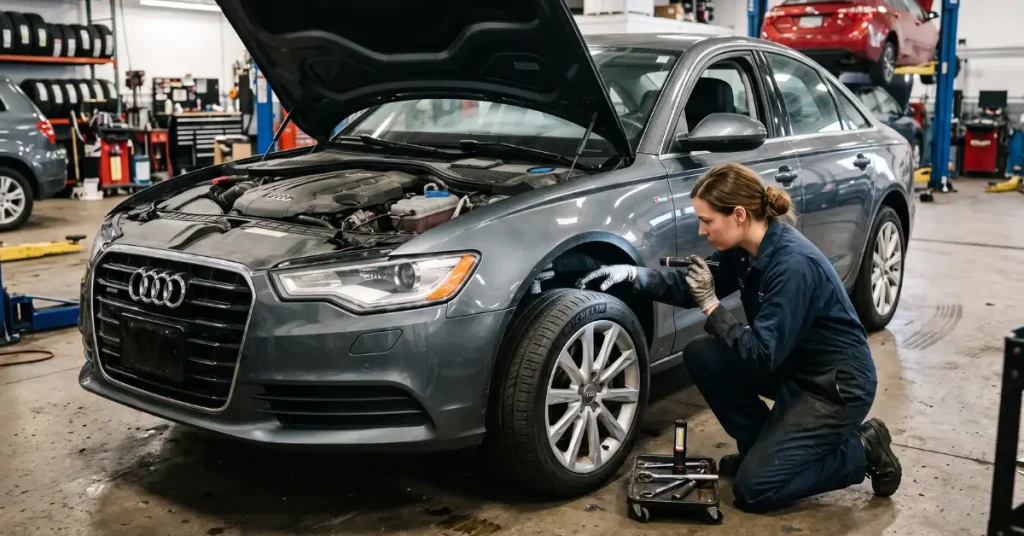
A weak car AC during the Dubai summer is often blamed on low refrigerant or a faulty compressor. However, many drivers do not realize that suspension problems can also reduce AC performance.
Excessive vibrations, poor wheel alignment, and worn suspension parts can place extra stress on the air conditioning system, especially during hot weather.
Damaged shocks, worn bushings, and sagging springs can create strong vibrations that affect AC pipes, seals, and compressor components. Suspension issues can also increase engine load, raise under-hood temperatures, and reduce cooling efficiency.
Understanding the connection between these systems helps you fix the real problem before it becomes an expensive repair.
Why Are Suspension and AC Systems Connected?
At first, suspension and air conditioning appear to be two separate systems. The suspension keeps the vehicle stable and absorbs road impacts, while the AC system cools the cabin.
In reality, both systems are affected by engine movement, chassis stability, and vehicle vibrations. When suspension components wear out, they allow more impact forces to travel through the vehicle frame.
These vibrations can affect delicate AC components, increasing the risk of leaks, compressor stress, and poor cooling performance.
How a Faulty Suspension Reduces AC Performance?
Several suspension-related problems can indirectly affect the cooling system. While the AC itself may not be faulty, the extra mechanical stress caused by worn suspension parts can shorten the lifespan of important air conditioning components.
1. Excessive Vibrations Can Damage AC Lines
Healthy shock absorbers and bushings absorb most road impacts before they reach the vehicle body. When these components wear out, vibrations travel directly through the chassis and engine bay.
Continuous shaking places stress on aluminum refrigerant pipes, flexible hoses, and rubber O-ring seals. Over time, small cracks or loose fittings can develop, allowing refrigerant to escape. As refrigerant levels drop, the AC loses its ability to produce cold air efficiently.
2. Suspension Problems Can Stress the AC Compressor Belt
The AC compressor operates using the engine’s accessory drive belt, also called the serpentine belt. A suspension system with worn mounts, damaged control arms, or uneven ride height can slightly change how engine loads are distributed during driving.
This additional stress may increase belt wear, create pulley misalignment, or cause belt slipping. If ignored, these issues can reduce compressor performance and eventually lead to costly compressor repairs.
3. Increased Engine Heat Reduces Cooling Efficiency
A damaged suspension often causes poor wheel alignment and higher rolling resistance. The engine must work harder to move the vehicle, especially during highway driving. This extra effort generates more heat inside the engine bay.
Since the AC condenser sits near the radiator, excessive engine heat makes it harder for the condenser to release heat. As condenser temperatures rise, cabin cooling performance decreases, especially during the UAE summer.
4. Uneven Ride Height Can Affect Airflow
Vehicles with worn springs or leaking air suspension may sit lower on one side. Although this does not directly damage the AC, an uneven vehicle height can slightly affect airflow through the front grille and around the condenser.
Reduced airflow limits heat transfer from the condenser, making it more difficult for the AC system to maintain cool cabin temperatures during heavy traffic or slow driving.
Why UAE Driving Conditions Make the Problem Worse?
The UAE presents some of the toughest conditions for both suspension and air conditioning systems. Summer temperatures regularly exceed 45°C, forcing the AC to operate at maximum capacity for long periods. This extra electrical load and heat also shorten battery life, so a car battery replacement in Abu Dhabi is a common summer job.
At the same time, frequent speed bumps, uneven roads, construction zones, and occasional potholes increase suspension wear. Desert sand and dust can also accelerate the deterioration of suspension bushings and moving parts.
When both systems operate under constant stress, even minor suspension faults can have a noticeable effect on AC performance.
Warning Signs That Suspension Problems May Be Affecting Your AC
Drivers should pay attention when suspension and cooling problems appear together. These symptoms often indicate that both systems require inspection rather than simply refilling the AC refrigerant.
Suspension Problem | Possible AC Effect |
Loud clunking over bumps | Vibrations may damage AC pipes and fittings |
Vehicle pulls to one side | Increased engine load reduces cooling efficiency |
Squealing belt noise | Belt misalignment affects AC compressor operation |
Uneven ride height | Reduced condenser airflow and weaker cooling |
Excessive bouncing | Increased vibration may cause refrigerant leaks |
Warm air from AC | Possible refrigerant loss due to damaged seals |
How to Prevent Suspension Damage From Affecting Your AC?
Regular maintenance not only improves driving comfort but also extends the lifespan of suspension components, reducing unnecessary stress on the air conditioning system and helping both systems perform more efficiently.
- Inspect Shock Absorbers Regularly: Check for oil leaks, excessive bouncing, unusual noises, and worn suspension components during every scheduled vehicle service.
- Drive Slowly Over Speed Bumps: Reducing speed lowers suspension impact, protecting shock absorbers, AC lines, engine mounts, and surrounding components from damage.
- Check Wheel Alignment Frequently: Proper alignment reduces rolling resistance, lowers engine workload, and improves suspension stability for better cooling performance.
- Inspect Drive Belts During Service: Regular belt inspections help identify cracks, glazing, tension issues, and pulley misalignment before compressor damage occurs.
- Repair Suspension Problems Early: Fixing worn bushings, damaged struts, leaking air springs, or broken mounts prevents vibrations from affecting the AC system.
- Schedule Complete Vehicle Inspections: A full inspection allows technicians to identify suspension and AC issues before they develop into expensive repairs.
Can Fixing Suspension Improve AC Performance?
In many cases, yes. If poor cooling is caused by vibration-related refrigerant leaks, excessive engine heat, or compressor belt stress, repairing the suspension may restore normal AC operation after any damaged AC components are repaired.
Replacing worn shocks, correcting wheel alignment, repairing leaking air suspension parts, and installing a new drive belt can reduce unnecessary stress throughout the engine bay. A complete inspection ensures that both systems are working together efficiently.
When Should You Visit a Workshop?
Do not ignore signs such as poor cooling, suspension noises, excessive bouncing, uneven ride height, or steering instability. If these symptoms appear together, both the suspension and AC system should be inspected.
A professional workshop can diagnose refrigerant leaks, compressor problems, worn suspension components, and alignment issues before they lead to major failures. Early repairs usually cost much less than replacing multiple damaged parts.
Conclusion
Suspension problems can do much more than affect ride comfort and vehicle handling. Excessive vibrations, poor alignment, increased engine heat, and uneven ride height can all reduce AC performance, especially in the demanding UAE climate.
Identifying these issues early helps protect both your suspension and air conditioning system while avoiding expensive repairs. If you notice suspension noises, weak AC cooling, or unusual vehicle vibrations, trust Suspension Repair Dubai for a complete inspection.
Our experienced technicians can identify suspension faults, diagnose related AC performance issues, and provide reliable repairs to keep your vehicle comfortable, safe, and ready for UAE roads.