
Professional Audi Shock Absorber Replacement
Restore your Audi to factory-level performance with our expert shock absorber replacement in Dubai. We use manufacturer-aligned calibration and precision geometry to eliminate vibrations, restore ride balance, and ensure long-term chassis stability.
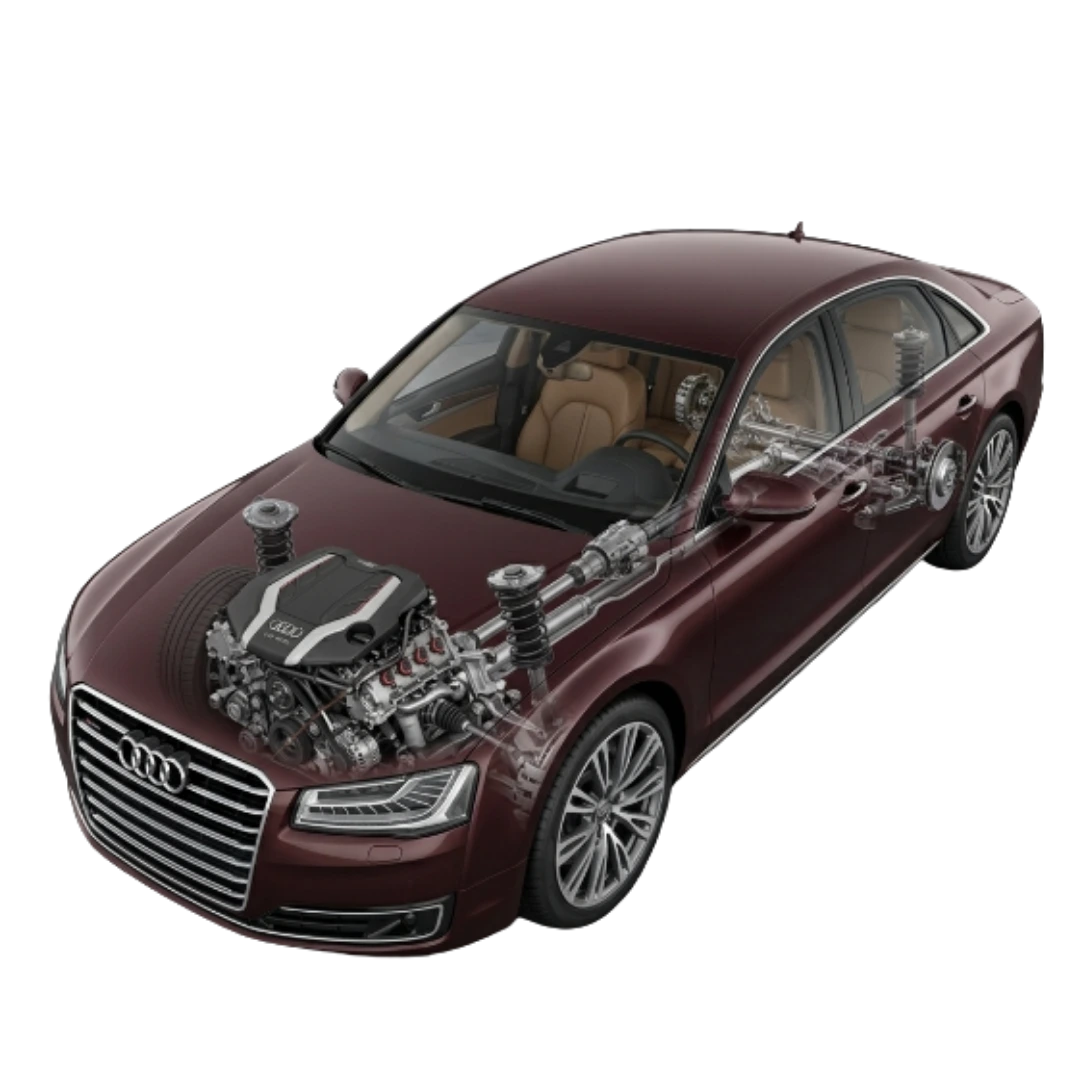
Why Choose Us for Audi Shock Absorber Replacement?
Maintaining the engineering excellence and refined ride quality of an Audi requires more than standard repair work. We combine manufacturer-level expertise, precision diagnostic tools, and premium-grade parts to restore the original driving dynamics that define every Audi model.
Certified Audi Suspension Specialists
Our technicians hold certifications in advanced European luxury suspension systems. We possess extensive hands-on experience with all Audi platforms, including the complex adaptive air suspension found in the Q7, Q8, A8, and RS performance models. Every replacement is performed with full accuracy and attention to factory specifications.
Genuine OEM and Premium Aftermarket Parts
We source only OEM-grade or top-tier suppliers like Bilstein and Sachs. These components match or exceed Audi’s original damping requirements, delivering long-term stability, comfort, and precise road control across all vehicle platforms.
Advanced Diagnostic and Calibration Equipment
Audi suspension systems, especially those with adaptive air struts, require precise computerized calibration after every replacement. Our workshop uses factory-aligned diagnostic software to reset suspension control modules and ensure the ride height and damping precision match exact manufacturer values.
Transparent Pricing and Honest Evaluation
Before beginning any repair, our team provides a detailed inspection report covering every affected suspension component. Clients receive a clear breakdown of findings, recommended parts, and service costs — with no hidden charges and no unnecessary repairs.
Comprehensive Suspension Care with Service Warranty
Beyond shock absorbers, our inspection covers struts, sway bar links, control arm bushings, and air bellows. Every Audi shock absorber replacement is backed by a service warranty that covers both parts and labor, providing clients with long-term assurance.
Shock Absorber Repair and Replacement Services We Provide
We provide 6 specialized shock absorber services for all Audi models in Dubai:
Standard Shock Absorber Replacement
Hydraulic and gas-charged unit removal and installation for A3, A4, and Q3 models using OEM-grade components.
Adaptive Air Suspension Repair
Specialized air strut replacement and leak detection for Q7, Q8, and A8 models, including full electronic ride-height calibration.
Electronic Damping Control (EDC) Service
Replacement of electronic dampers for S and RS models, ensuring seamless integration with the Audi Drive Select system.
Suspension Geometry and Wheel Alignment
Four-wheel laser alignment is performed after every shock absorber replacement to restore factory suspension angles.
Full Suspension System Inspection
Comprehensive check of air bellows, springs, control arm bushings, sway bar links, and shock mounts alongside shock servicing.
Post-Replacement Calibration
Computerized damping adjustment and road test performed after every replacement to confirm ride balance and handling precision.
How to Know If Your Audi Shock Absorbers Need Professional Replacement?
Worn shock absorbers produce clear physical symptoms that affect ride quality, handling, and vehicle safety. Recognizing these signs early helps prevent further damage to tires, struts, and expensive air suspension components. Call our experts if you see any of the following signs:
Bouncy Ride
Worn Audi shock absorbers cause the vehicle to bounce repeatedly after crossing a bump instead of settling immediately. This excessive movement confirms the internal damping mechanism has deteriorated.
Fluid Leaks
Hydraulic oil visible on the shock absorber body confirms internal seal problems. Once a shock absorber loses fluid, it loses the ability to manage road impacts and must be replaced.
Uneven Tire Wear
Worn shocks allow the tire to lose consistent contact with the road, leading to cupping or scalloping patterns on the tread.
Nose-Diving or Squatting
The front end dips sharply during braking, or the rear drops during hard acceleration. Both are signs that the shocks are no longer managing weight transfer effectively.
Strange Noises
Clunking or squeaking sounds while driving over rough surfaces indicate deteriorated mounts, worn bushings, or internal component failure within the shock unit.
Longer Braking Distance
Worn dampers reduce tire-to-road contact, increasing stopping distances. According to industry safety data, vehicles with worn dampers require up to 20% more distance to stop compared to those with functional units.
Major Causes of Shock Absorber Damage
Audi vehicles are built for high performance, but shock absorbers experience wear from harsh environmental conditions in Dubai.
- Age and Mileage: Audi shock absorbers typically require assessment between 80,000 and 100,000 kilometers, depending on road conditions.
- Harsh Road Conditions: Driving over speed bumps and uneven asphalt in high-heat environments accelerates the wear of internal seals and bushings.
- Overloading: Exceeding the vehicle’s rated capacity places excessive stress on shocks and air springs.
- Corrosion and Heat: Dubai’s intense heat and coastal humidity can degrade mounting hardware and air bellows over time.
- Seal Degradation: Over time, internal seals weaken, allowing fluid to escape, which reduces damping effectiveness.
- Irregular Maintenance: Skipping routine inspections allows minor leaks to progress into full system failures.
Types of Shock Absorbers We Used in Audi Vehicles
Audi integrates diverse technologies across its lineup, and our experts are trained to handle each type.
Hydraulic (Oil-Filled) Shocks
Used in entry-level models, these provide consistent damping for daily urban driving.
Gas-Charged Shocks
These incorporate nitrogen gas to prevent fluid foaming, offering faster response times for improved handling on mid-range models.
Adaptive Air Suspension
Found in luxury Audi models, these systems use air-filled bellows instead of coil springs. These require specialized diagnostic equipment for proper leveling and sensor reset.
Benefits of Replacing Worn Shock Absorbers
Eliminates vibration and harsh impacts, returning the smooth ride Audi is famous for.
Maintains tire contact, reducing body roll and improving driver confidence in corners.
Significantly shorter braking distances and better stability during emergencies.
A balanced system prevents irregular tread wear, extending tire life by up to 30%.
Audi Shock Absorber Replacement Process (Step-by-Step)
We scan for fluid leaks, air leaks in bellows, and physical damage.
The Audi is raised on a professional lift for safe access.
Wheels are removed to access the suspension mounting points.
Fasteners are loosened using high-torque precision tools.
The worn unit is extracted carefully to avoid cable damage.
New parts are installed and torqued to manufacturer specs.
Wheels are refitted, and all connections are verified.
A four-wheel alignment is performed, and for air suspension, we use software to calibrate ride height and damping levels.
Maintenance Tips After Shock Absorber Replacement
Replacing shock absorbers is a key step in preserving Cadillac suspension performance. Following a structured maintenance routine after replacement extends service life and prevents premature wear.
Visit us every 15,000 kilometers to check for early signs of wear.
Follow the door placard recommendations to support proper shock function.
Stay within the manufacturer’s payload limits to prevent structural stress.
Regular alignment ensures even load distribution across all four wheels.
Rinsing off sand and debris helps protect the suspension components from corrosion.
Audi Shock Absorber Replacement Cost – Key Factors
| Cost Factor | Description |
|---|---|
| Model and Year | High-end models with air suspension cost more due to complex parts. |
| Shock Type | Air struts are significantly more expensive than standard hydraulic shocks. |
| Labor Rates | The complexity of adaptive systems requires more time and expertise. |
| Additional Repairs | Worn bushings or mounts found during inspection may increase costs. |
| Parts Quality | OEM parts ensure longevity and compatibility with Audi systems. |
Note: Always replace shock absorbers in axle pairs to maintain balanced handling.
Why Professional Replacement Matters?
Audi's suspension is electronically integrated with stability and traction control. Our professional replacement ensures correct sensor calibration, which is vital for the safety systems to function correctly. Without proper programming, your car may show warning lights or display erratic handling.
Frequently Asked Questions
How do I know if my Audi needs new shocks?
Look for bouncy rides, fluid leaks, uneven tire wear, or knocking noises. If you notice your Audi feeling unstable during sharp turns or highway driving, these are definitive indicators that your suspension system requires immediate attention.
How often should I replace Audi shock absorbers?
Usually between 80,000 and 100,000 kilometers, though Dubai driving conditions may shorten this interval. We suggest having an Audi professional inspect your struts and dampers every 15,000 kilometers to ensure they remain within safe operating limits.
Can I drive my Audi with bad shock absorbers?
It is not recommended, as it increases braking distances and risks damaging other suspension parts. Driving a compromised Audi leads to increased stress on steering components and tires, which could result in a much more expensive repair bill later on.
Are Audi shock absorbers and struts the same?
They function similarly, but struts are structural components, while shocks specifically dampen movement. Understanding that your Audi uses either a strut assembly or a traditional shock absorber is important for identifying the correct repair process for your specific model.
Do you calibrate Audi air suspension systems?
Yes, we use factory-grade software to reset the electronic ride control system. Precise calibration is essential for an Audi to maintain its programmed ride height and ensure the adaptive damping settings function correctly after new hardware is installed.
Do you use original parts for Audi repairs?
We use OEM-grade parts that meet or exceed Audi specifications. By utilizing high-quality components designed for your specific Audi, we guarantee that the ride quality and handling remain consistent with the original factory standards.
How long does an Audi shock absorber replacement take?
Standard replacements take 2–3 hours; air suspension work may take longer due to calibration requirements. Our team works efficiently to get your Audi back on the road in Dubai while ensuring that every bolt and sensor is handled with extreme precision.
What causes rapid wear on Audi shock absorbers?
Rough roads, overloading, and extreme desert heat are the primary factors. Consistent exposure to high temperatures and uneven road surfaces in Dubai accelerates the degradation of internal Audi suspension seals and hydraulic fluids.
Do I need an alignment for my Audi afterward?
Yes, an alignment is mandatory to ensure correct geometry and tire longevity. An expert four-wheel laser alignment is critical to ensure your Audi maintains its handling balance and does not suffer from premature or uneven tire tread wear.
Should I replace all four Audi shocks at once?
We recommend replacing them in pairs (front or rear) to ensure balanced performance. Replacing them in pairs maintains the stability of your Audi, preventing the vehicle from leaning or reacting inconsistently when you are navigating corners or braking.