
Affordable GMC Shock Absorber Replacement
Experience the original comfort of your GMC with professional shock absorber repair in Dubai. Our experts combine OEM-grade parts and factory-level calibration to eliminate bouncing, restore handling, and keep your vehicle safe.
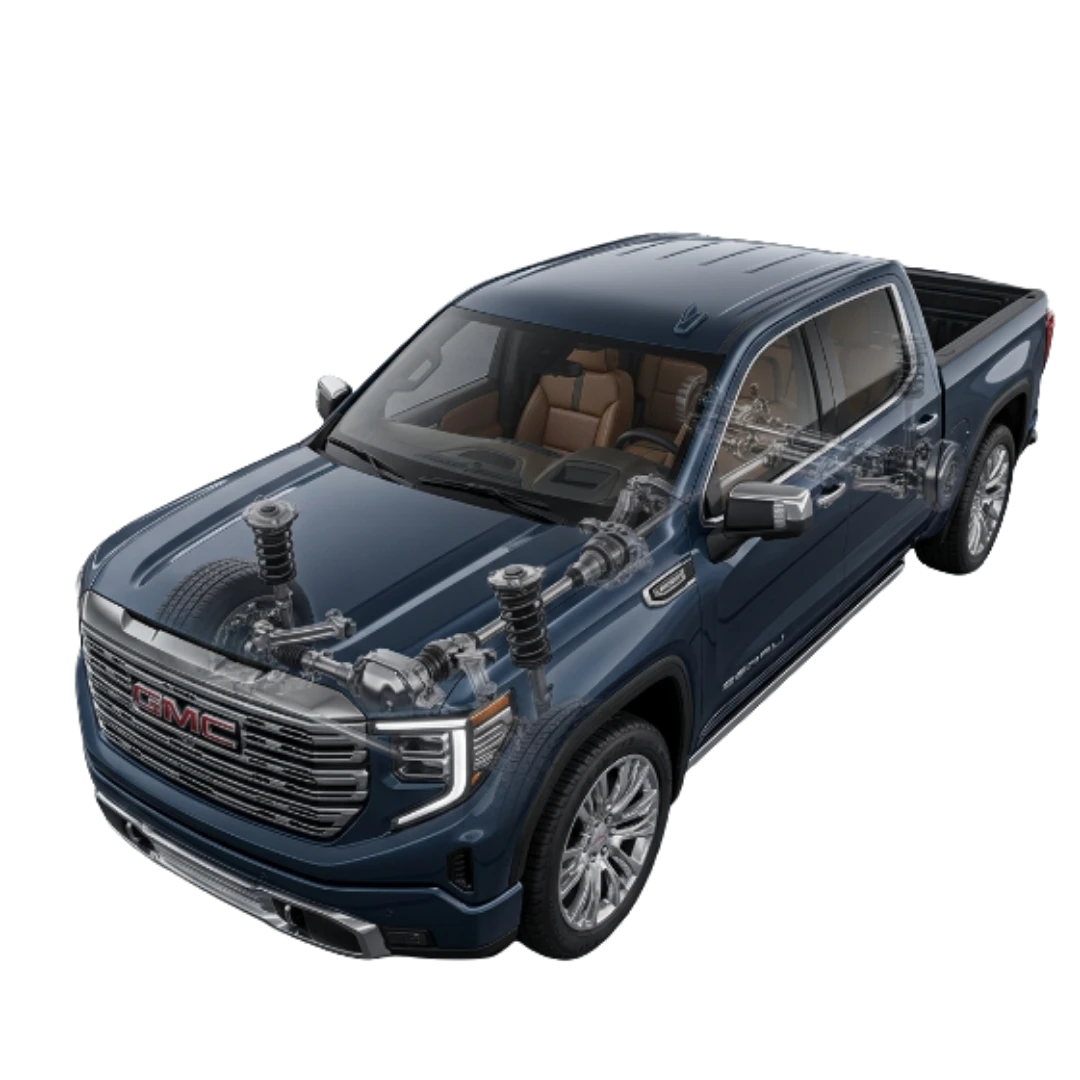
Why Choose Us for Jaguar Shock Absorber Replacement?
Maintaining the performance and ride quality of a GMC requires more than standard repair work. Our team combines manufacturer-level expertise, precision tools, and premium-grade parts to restore the original comfort and confidence that define every GMC model.
Here is why GMC owners in Dubai trust our team:
Certified GMC Suspension Specialists
Our technicians hold certifications in luxury and heavy-duty vehicle suspension systems. They carry hands-on experience with all GMC platforms, including the Yukon’s Magnetic Ride Control and electronic damping systems found in the Sierra and Acadia. Every replacement is performed with full accuracy and attention to factory standards.
Genuine OEM and Premium Aftermarket Parts
We source only OEM-grade or top-tier Bilstein and Monroe replacement shock absorbers. These components match or exceed GMC’s original damping specifications, delivering long-term stability, comfort, and road control across all models.
Advanced Diagnostic and Calibration Equipment
GMC suspension systems, particularly those equipped with electronic damping, require computerized calibration after every replacement. Our workshop uses factory-aligned diagnostic tools and laser alignment systems to restore suspension geometry and damping precision to exact manufacturer values.
Transparent Pricing and Honest Evaluation
Before beginning any repair, our team provides a detailed inspection report covering every affected suspension component. Clients receive a clear breakdown of findings, recommended parts, and service costs — with no hidden charges and no unnecessary repairs.
Comprehensive Suspension Care with Service Warranty
Beyond shock absorbers, our inspection covers struts, sway bar links, control arm bushings, and spring mounts. Every GMC shock absorber replacement is backed by a service warranty that covers both parts and labor, providing clients with long-term assurance.
Shock Absorber Repair and Replacement Services We Provide
We provide 6 specialized shock absorber services for all GMC models in Dubai:
Standard Shock Absorber Replacement
Hydraulic and gas-charged shock absorber removal and installation for GMC Terrain and Canyon models using OEM-grade components.
Magnetic Ride Control (MRC) Shock Replacement
Specialized MRC unit replacement for Yukon Denali and Sierra Denali trims, including full electronic calibration and sensor reset.
Shock Absorber Leak Inspection and Seal Diagnosis
Hydraulic fluid leak detection and internal seal condition assessment across all four shock absorber units.
Suspension Geometry and Wheel Alignment
Four-wheel laser alignment performed after every shock absorber replacement to restore factory suspension geometry.
Full Suspension System Inspection
Comprehensive inspection of struts, springs, control arm bushings, sway bar links, and shock mounts alongside shock absorber servicing.
Post-Replacement Road Testing and Calibration
Computerized damping calibration and road test performed after every replacement to confirm ride balance, stability, and handling precision.
How to Know If Your GMC Shock Absorbers Need Professional Replacement?
Worn shock absorbers produce clear physical symptoms that affect ride quality, handling, and vehicle safety. Recognizing these signs early helps prevent further damage to tires, struts, and control arms.
Bouncy Ride
Worn GMC shock absorbers cause the vehicle to bounce 2 to 3 times after crossing a bump instead of settling immediately. This excessive body movement confirms that the internal hydraulic damping mechanism has deteriorated.
Fluid Leaks
Hydraulic oil visible on the shock absorber body or surrounding area confirms internal seal problems. Once a shock absorber loses fluid, it loses the ability to control suspension movement and must be replaced immediately.
Uneven Tire Wear
Shock absorbers that have seen extended use may allow slight variations in tire contact with the road, leading to unique tread patterns such as cupping or scalloping.
Nose-Diving or Squatting
The front end dips sharply during braking, or the rear drops noticeably under hard acceleration. Both are signs that the shock absorbers are no longer managing weight transfer effectively across the chassis.
Strange Noises
Clunking, knocking, or squeaking sounds produced during cornering or while driving over rough surfaces indicate deteriorated shock mounts, worn bushings, or internal component failure.
Longer Braking Distance
Worn shock absorbers reduce consistent tire-to-road contact, which directly increases stopping distance. According to studies by the European Enhanced Vehicle-Safety Committee (EEVC), vehicles with worn dampers require up to 20% more distance to stop compared to vehicles with new shock absorbers.
Major Causes of Shock Absorber Damage
GMC vehicles are built to exacting standards, but shock absorbers still experience wear from regular use and environmental conditions.
- Age and Mileage: GMC shock absorbers typically require replacement between 80,000 and 120,000 kilometers, depending on road conditions and driving frequency.
- Harsh Road Conditions: Regular driving across diverse road conditions—such as potholes and uneven asphalt—highlights the durability of the damping system and presents a great opportunity for timely maintenance.
- Overloading or Towing: Carrying loads beyond the vehicle’s rated capacity places excess stress on shocks, springs, and struts simultaneously.
- Corrosion and Heat: Dubai’s high temperatures and coastal humidity highlight the importance of protecting shock absorber bodies against corrosion.
- Seal Degradation: Over time, hydraulic seals weaken and allow internal fluid to escape, reducing damping effectiveness.
- Irregular Maintenance: Skipping routine suspension inspections allows early-stage wear to progress, leading to full component failure.
Types of Shock Absorbers We Used in GMC Vehicles
GMC integrates multiple technologies across its lineup, each matched to the model's performance requirements.
Hydraulic (Oil-Filled) Shocks
These use pressurized oil to resist and absorb movement. They are found in base suspension configurations, delivering consistent performance for daily urban use.
Gas-Charged Shocks
These use a nitrogen gas chamber alongside hydraulic oil to prevent fluid foaming. Many GMC models use these for quicker response times and improved handling on mixed road surfaces.
Magnetic Ride Control (MRC) Shocks
This proprietary adaptive system uses magnetorheological fluid to adjust the damping force up to 1,000 times per second. Models like the Yukon Denali require these specialized units and expert electronic calibration.
Benefits of Replacing Worn Shock Absorbers
New shock absorbers restore the refined ride quality GMC owners expect, absorbing road irregularities cleanly.
Functional shocks maintain proper tire contact during cornering, reducing body roll and improving driver confidence.
Consistent tire-to-road contact shortens braking distances and improves vehicle stability during emergency stops.
A balanced suspension ensures equal pressure distribution, preventing premature tread wear and extending tire life by up to 30%.
GMC Shock Absorber Replacement Process (Step-by-Step)
The system is examined for leaks, corrosion, and wear.
The GMC is raised on a hydraulic lift for safe undercarriage access.
Wheels are removed to allow access to mounting points.
Upper and lower bolts are loosened using calibrated torque tools.
The worn unit is extracted using specialized tools.
New components are installed and torqued to manufacturer specifications.
Wheels are reinstalled, and fasteners are double-checked.
Four-wheel alignment is performed, followed by a road test to confirm handling precision.
Maintenance Tips After Shock Absorber Replacement
Have the suspension system inspected every 10,000 to 15,000 kilometers.
Follow the manufacturer’s placard to support new shock absorbers.
Respect the vehicle’s maximum payload capacity to prevent suspension strain.
This ensures even load distribution and prevents irregular tire wear.
Regularly remove road debris and salt to prevent corrosion on shock bodies.
GMC Shock Absorber Replacement Cost – Key Factors
| Cost Factor | Description |
|---|---|
| Model and Year | Luxury trims with MRC cost more due to system complexity. |
| Shock Absorber Type | Electronic dampers carry higher parts costs than standard shocks. |
| Front or Rear | Front replacement involves more labor due to the steering proximity. |
| Labor Rates | Depends on the certification level and the equipment used. |
| Additional Repairs | Worn mounts or bushings may increase the total scope. |
| Parts Quality | OEM parts offer longer service life and better performance. |
Why Professional Replacement Matters?
GMC suspension systems are electronically integrated with stability and traction control modules. Using proper calibration equipment ensures the control module receives accurate sensor data, preventing warning lights and maintaining safety. A professional replacement restores factory-level performance standards and keeps your vehicle safe on the road.
Frequently Asked Questions
How do I know if my GMC shocks need replacement?
Look for excessive bouncing, visible oil leaks, uneven tire wear, nose-diving during braking, or clunking noises. If you notice any of these signs while driving, it is best to have an expert perform a professional inspection immediately.
How often should GMC shocks be replaced?
Typically, every 80,000 to 120,000 kilometers, though frequent off-roading may require earlier checks. Regularly monitoring your suspension health every 15,000 kilometers can help you catch potential issues before they cause further damage.
What happens if I drive a GMC with bad shocks?
It increases braking distances by up to 20% and accelerates wear on other suspension parts. Maintaining your shock absorbers is essential for keeping your vehicle stable and ensuring the safety of your passengers on the road.
Are GMC shocks the same as struts?
No. Shocks control movement, while struts act as structural, load-bearing components. Understanding this distinction is helpful when identifying which specific part of your GMC’s suspension system may require professional service.
Do GMC vehicles have adaptive suspension?
Yes, models like the Yukon Denali use Magnetic Ride Control to adjust damping in real-time. This advanced technology allows the vehicle to automatically adapt to road conditions, providing a smoother and more controlled driving experience.
Can I use GMC aftermarket shocks?
Yes, provided they meet GMC’s specific load and damping requirements. Using high-quality aftermarket parts from reputable brands can provide performance that matches or even exceeds original equipment standards.
How long does the GMC shock replacement take?
Standard replacement takes 2 to 3 hours; MRC systems may take 3 to 5 hours. We prioritize precision during the installation and calibration process to ensure your vehicle is returned to you in top condition.
What causes premature GMC shocks to wear?
Rough roads, exceeding payload capacities, and heat exposure are primary factors. Avoiding these heavy stressors whenever possible and sticking to a consistent maintenance schedule can significantly extend the lifespan of your suspension components.
Should I replace all four GMC shocks at once?
You should replace them in axle pairs to maintain balanced handling. Replacing shocks in pairs ensures that the damping force is equal across both sides, which is critical for consistent steering and overall vehicle safety.
Is the GMC alignment necessary?
Yes, a four-wheel alignment is required after any suspension work to ensure proper geometry. Performing this alignment helps protect your tires from uneven wear and guarantees that your GMC handles as accurately as it did when it was new.