
How To Fix BMW X5 Air Suspension Problems in Dubai
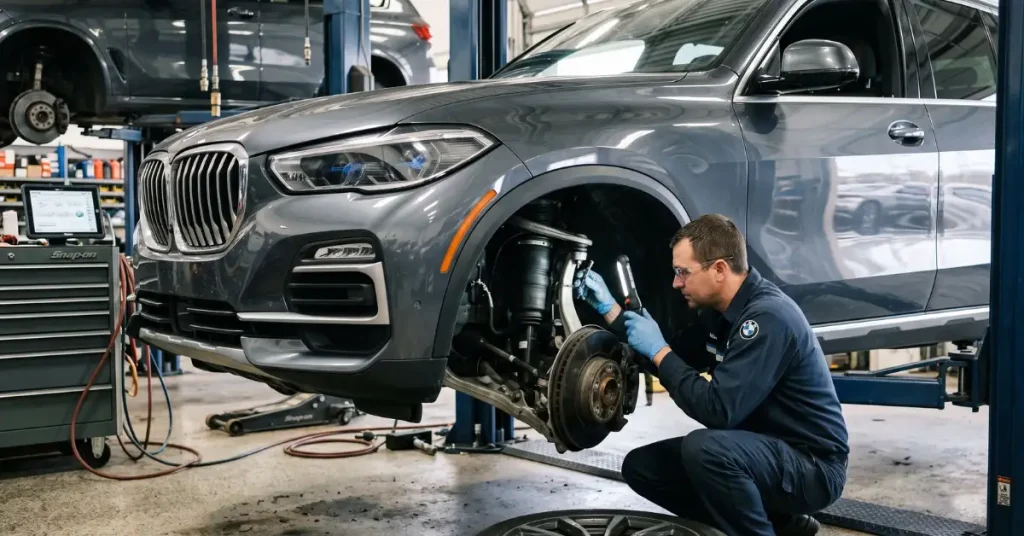
A BMW X5 is designed to deliver excellent ride comfort and handling, but its air suspension system can develop problems over time. In Dubai, extreme summer temperatures, frequent speed bumps, and dusty conditions can speed up wear on rubber air springs and other suspension components.
Most BMW X5 air suspension issues can be fixed by diagnosing the fault, checking for air leaks, testing the compressor, inspecting ride height sensors, replacing damaged parts, and recalibrating the system.
Fixing the problem early helps restore ride comfort, prevents additional damage, and avoids more expensive repairs later.
How Does the BMW X5 Air Suspension Work?
The BMW X5 uses an electronic air suspension system that replaces traditional coil springs with air springs. The system includes an air compressor, valve block, ride height sensors, air lines, and an electronic control module (ECU).
These components work together to maintain the correct ride height, improve driving comfort, and keep the vehicle level when carrying passengers or luggage.
If one component fails, the entire system may not operate correctly, resulting in warning lights, poor ride quality, or uneven vehicle height.
Common BMW X5 Air Suspension Problems
Several issues appear more frequently on BMW X5 models, especially vehicles driven in Dubai’s demanding climate.
1. Leaking Air Springs
The rear air springs are made from reinforced rubber that naturally wears over time. High temperatures can dry out the rubber, causing cracks that allow compressed air to escape. A leaking air spring often causes one side of the vehicle to sit lower after being parked overnight.
2. Failed Air Compressor
The compressor supplies pressurized air to the suspension system. When an air leak develops, the compressor works continuously to maintain ride height. This extra workload eventually causes overheating and compressor failure.
3. Faulty Ride Height Sensors
Ride height sensors monitor the position of each wheel and send information to the ECU. Damaged sensor arms, broken wiring, or calibration issues can cause incorrect ride height adjustments and dashboard suspension warnings.
4. Valve Block Problems
The valve block controls airflow between the compressor and air springs. Dirt, moisture, or internal valve wear can prevent proper air distribution, causing uneven suspension height or slow system response.
5. Air Line Leaks
The plastic air lines that carry compressed air can become damaged due to age, road debris, or improper installation. Even a small crack or loose fitting allows air to escape, forcing the compressor to run more often. If left unrepaired, this can eventually lead to compressor failure and uneven ride height.
6. Suspension Control Module (ECU) Faults
The electronic suspension control module manages the entire air suspension system using information from various sensors. Software errors, electrical faults, or damaged wiring can prevent the system from adjusting ride height correctly. In many cases, the dashboard displays suspension warning messages even though the mechanical components are in good condition. A weak battery often triggers these false alerts, and a timely car battery replacement in Dubai can save you from an unnecessary suspension repair.
7. Moisture in the Air Compressor System
The air compressor uses a desiccant dryer to remove moisture before air enters the suspension system. Over time, the dryer can become saturated, allowing moisture to enter the valve block and air lines. This may reduce compressor efficiency, affect ride height adjustments, and accelerate internal corrosion.
Signs Your BMW X5 Air Suspension Needs Repair
Recognizing the warning signs early can help prevent complete suspension failure and reduce repair costs.
- Vehicle Sits Lower Overnight: A leaking air spring or air line allows pressure to escape while the vehicle is parked.
- Suspension Warning Light Appears: Dashboard alerts usually indicate pressure loss, sensor faults, or electronic control issues.
- Compressor Runs Constantly: Continuous compressor operation often points to hidden air leaks within the suspension system.
- Uneven Ride Height: One corner of the vehicle may appear lower due to leaking airbags or faulty sensors.
- Harsh or Bouncy Ride: Reduced ride comfort usually means the suspension can no longer maintain proper air pressure.
- Slow Ride Height Adjustment: Delayed suspension response often indicates compressor weakness or valve block problems.
Step-by-Step Guide to Fix BMW X5 Air Suspension Problems
Proper diagnosis is the most important step before replacing any suspension component. Many symptoms look similar, but the actual cause may be completely different.
Step 1: Scan for Diagnostic Trouble Codes
Connect a BMW-compatible OBD diagnostic scanner to read stored fault codes from the suspension control module. Error codes can identify problems with the compressor, ride height sensors, pressure sensors, or valve block. Starting with a scan reduces unnecessary parts replacement and speeds up repairs.
Step 2: Check for Air Leaks
Pressurize the suspension system and spray soapy water around the air springs, air lines, fittings, and valve block. If bubbles appear, air is escaping from that location. Even a small leak forces the compressor to work harder and should be repaired immediately.
Step 3: Test the Air Compressor
Listen carefully while the compressor operates. A healthy compressor runs for a short period before stopping. If it runs continuously, sounds unusually loud, or struggles to build pressure, it may be worn out or compensating for an air leak elsewhere in the system.
Step 4: Inspect Ride Height Sensors
Check the ride height sensors near each wheel for broken linkages, damaged wiring, or loose connectors. Incorrect sensor readings can cause improper ride height adjustments even if the rest of the suspension system is working normally.
Step 5: Replace Damaged Components
Replace leaking air springs, damaged air lines, faulty valve blocks, worn compressors, or defective sensors with quality OEM or high-quality aftermarket parts. Replacing only the failed component often restores the suspension system without replacing unnecessary parts.
Step 6: Calibrate the Suspension
After repairs, use a BMW diagnostic tool to clear stored fault codes and recalibrate the suspension height. Proper calibration ensures the vehicle returns to factory ride height and all electronic controls operate correctly.
DIY Air Spring Replacement for Experienced Owners
Some experienced vehicle owners choose to replace a leaking rear air spring themselves. However, the repair requires proper tools and careful handling because the suspension operates under high air pressure.
The basic repair process includes:
- Disconnect the battery and remove the suspension fuses.
- Safely raise and support the vehicle.
- Slowly release air pressure from the suspension.
- Remove the damaged air spring.
- Install the new air spring correctly.
- Reconnect the air line and electrical connections.
- Lower the vehicle and allow the compressor to refill the system.
- Clear fault codes and recalibrate ride height.
If you are unfamiliar with BMW suspension systems, professional installation is the safer option.
BMW X5 Air Suspension Repair Cost in Dubai
Repair costs depend on the damaged component, labor charges, and whether OEM or aftermarket parts are used.
Repair Service | Estimated Cost (AED) |
Air Suspension Spring Replacement | 1,500 to 4,500 |
Air Compressor Replacement | 2,000 to 5,500 |
Ride Height Sensor Replacement | 650 to 1,800 |
Air Line Repair | Varies by damage |
Suspension System Diagnosis | Varies by workshop |
These prices are estimates and may vary depending on your BMW X5 model year and the workshop you choose.
How to Extend the Lifespan of BMW X5 Air Suspension?
Regular maintenance helps improve reliability and increase the lifespan of the suspension. Preventive care is especially important in Dubai’s hot climate.
- Inspect Air Springs Regularly: Look for cracks, dry rubber, and small leaks before they become major problems.
- Avoid Hard Impacts: Slow down over speed bumps and rough roads to reduce suspension stress.
- Keep the Suspension Clean: Remove sand and dirt from suspension components to reduce premature wear.
- Fix Small Leaks Quickly: Minor leaks can quickly overwork the compressor and increase repair costs.
- Schedule Regular Diagnostics: Routine inspections help detect hidden electronic or mechanical faults before they worsen.
When Should You Visit a BMW Suspension Specialist?
If your BMW X5 displays suspension warning lights, sits unevenly, rides roughly, or the compressor runs continuously, professional diagnosis is recommended.
Modern BMW air suspension systems require specialized diagnostic equipment and proper calibration after repairs. Delaying repairs can lead to additional component failures and much higher repair costs.
Conclusion
BMW X5 air suspension problems are common as the vehicle ages, particularly in Dubai’s extreme heat and demanding driving conditions. Leaking air springs, faulty compressors, damaged sensors, and valve block issues can all affect ride quality and vehicle safety.
Diagnosing problems early and replacing worn components helps restore comfort while preventing expensive repairs. If your BMW X5 is experiencing suspension issues, trust Suspension Repair Dubai for expert diagnosis and professional repairs.
Our experienced technicians use advanced diagnostic equipment to identify faults, replace damaged components, and restore your BMW’s air suspension system to reliable working condition.